

Drought in Honduras: How Agroecology & Village Chickens Can Help Families Keep Food on the Table
As El Niño threatens harvests in Honduras’s Dry Corridor, families in Langue are turning to poultry farming and agroecology to maintain food production, build soil health, and reduce dependence on external inputs, with guidance from a team of young community volunteers.
In Honduras’s Dry Corridor, native chickens have long helped rural families produce food and earn income. As drought pressures maize and bean harvests, poultry farming can become especially valuable for farmers. In Langue, young agroecology volunteers are working with Vecinos Honduras to revive native chicken raising and explore how linking poultry with crop production can help families build more drought-resilient farming systems.
When harvests fall short: impact of El Niño on staple crops in Honduras
In 2026, El Niño-related drought caused widespread crop damages, affecting access to staple food for hundreds of thousands of smallholder farmer families in Honduras. The southern Dry Corridor was among the hardest-hit areas. In October, the Food and Agriculture Organization of the United Nations (FAO) forecast below-average maize production for the year. White maize wholesale prices rose about 20% from July 2025, while an estimated 1.88 million people were projected to face acute food insecurity between August and October 2026.
For families who rely on maize and beans for much of their food, a poor harvest can lead to less food for the household and less surplus to sell. At the same time, rising fertilizer prices increase the cost of producing the next crop. With fertilizer prices up nearly 50% since the beginning of the year and wholesale maize prices also climbing, farmers face pressure on both sides: less to sell and higher costs to keep farming. Families may also have to spend more to replace the food they would normally produce themselves.
Native chickens provide a locally controlled source of food. Across rural communities, families have traditionally raised them around their homes, using eggs and meat for household consumption and selling birds or eggs when they need cash. A 2026 review of village chickens found that they can contribute to dietary diversity and livelihood security, particularly for women and other groups with fewer income opportunities. But village chickens can also provide an important resource for farmers: manure.

Connecting the coop to the field
Chicken manure, known locally as gallinaza, can return nutrients to the soil when handled and applied appropriately, while crops can provide ingredients for chicken feed. This creates a cycle in which resources from one part of the farm support another. Vecinos Honduras is exploring these connections with rural families in Honduras’s Dry Corridor, helping them develop agroecological farming systems that make better use of local resources and strengthen their ability to face prolonged drought.
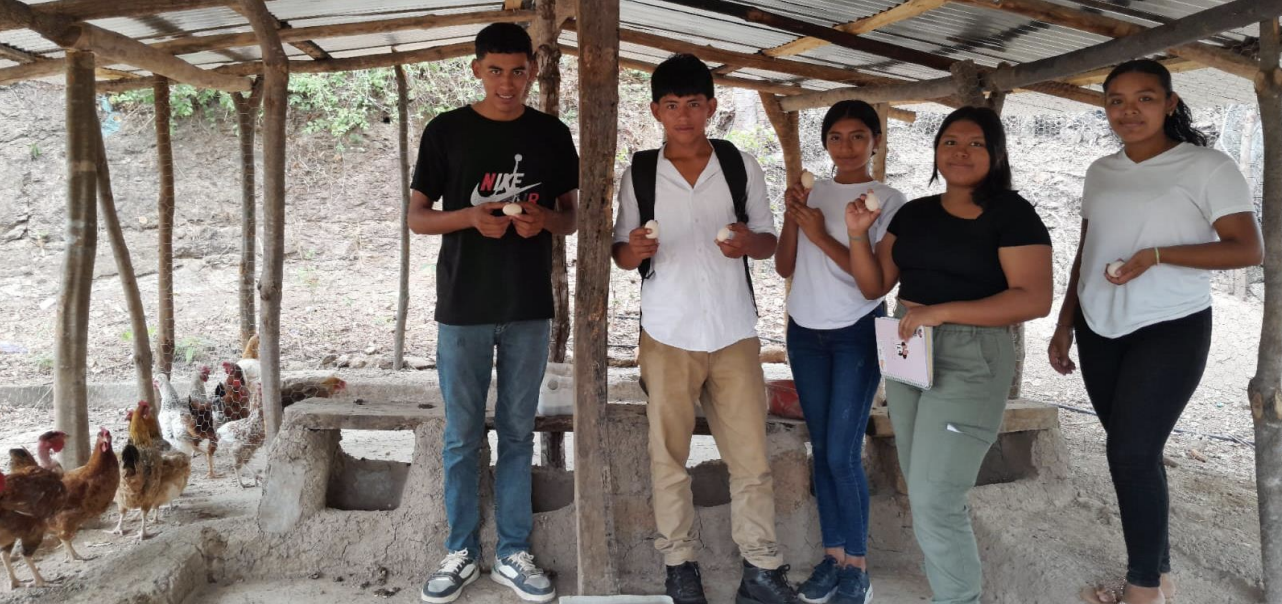
In the municipalities of Langue, Valle, and Concepción de María, Vecinos Honduras is working with 15 young community volunteers, in partnership with Groundswell International, to revive native chicken raising and explore how poultry and crop production can complement each other. As some families have moved away from practices their elders once followed, the initiative brings generations together to recover this knowledge and adapt it to current needs. Through youth-led experiments, participants are exploring ways to improve soil health, reduce reliance on costly external inputs with resources they have on hand, and secure access to food year-round.
As part of the initiative, youth volunteers received training in soil health, agroecological practices, biofertilizer preparation, and native chicken raising for egg production and manure. They built coops using locally available materials, designed to hold up to 50 birds, and participants contributed with some of their chickens. Monthly meetings and field visits gave them opportunities to share experience and discuss what they were learning.
Community elders shared their knowledge of raising and breeding native chickens, including traditional practices that use biological indicators and lunar phases to guide poultry management. As part of the experiment, the young volunteers also compared eggs from native chickens and commercial farms, examining differences in production, characteristics, cost, and consumption.
During the prolonged drought this year, families involved in the initiative reported that they still had eggs and meat for household consumption despite severe impacts on agricultural production. Chickens helped supplement their food supply when crop harvests suffered.
The next steps include developing homemade poultry feed from locally available ingredients throughout the year and training more families to use chicken manure as a natural fertilizer so they can build autonomy and self-reliance. Volunteers are currently leading other experiments to test how agroecology and diversified farming systems can help families strengthen their resilience to climate change.

Village chickens vs. factory farmed chickens in Honduras
As part of the experiment, the young volunteers compared eggs from native chickens raised in their communities with factory-farmed eggs sold in local shops. They recorded differences in weight, shell strength, appearance, and price, as well as the costs of producing eggs at home compared with buying them.
| Characteristic | Native chicken eggs | Factory-farmed eggs |
|---|---|---|
| Average weight recorded | 67 g | 62 g |
| Shells | Described by participants as firmer and more resistant | Described as thinner and more fragile |
| Egg white and yolk | Reported as firmer, with more vivid colors | Reported as more liquid and less firm |
| Reported price per egg | About US$0.19, without transport costs | About US$0.26 |
| Estimated cost of 350 eggs per week | US$13.46, produced by 20 native hens raised in a coop | US$80.76, purchased from local shops or supermarkets |
| Feed and production | Birds forage and can eat locally grown maize, sorghum, and crop residues | Commercial production systems using formulated feed |
Source: Community case study by project participants. Prices are reported local figures, not national averages. Egg characteristics reflect participants’ observations.
The project’s comparison highlights the potential economic value of raising native chickens at home and its role in food security. It estimates that producing 350 eggs a week with 20 hens costs L 350 (about US$13.46), compared with L 2,100 (about US$80.76) to buy the same quantity from local shops or supermarkets. Based on these estimates, producing eggs at home costs around 83% less than purchasing them.
The benefits extend beyond eggs. Families can consume what their hens produce, sell or share any surplus, raise replacement birds, and use chicken manure to fertilize their crops. Together, these benefits make native chickens a valuable complement to crop production, strengthening access to food during extreme climate events and reducing reliance on expensive inputs.
—
Reviving native chicken raising is one part of Vecinos Honduras’ broader work to strengthen food security and help rural families adapt to climate change. Across the Dry Corridor, we work with Vecinos Honduras to support community grain reserves, local food businesses, and training in agroecological practices that improve soil health. Together, these initiatives help families sustain crop production, store and market staple foods, generate income, and maintain access to food when drought or erratic rainfall affects harvests.
Farmers and youth take an active role in testing solutions, building on local knowledge, and responding to challenges in their communities. By experimenting with different practices and assessing what works under their own conditions, families can make informed decisions about how to manage their farms and secure their food supply. With more options to draw on and greater confidence in what works for them, families can be better equipped to face drought and other climate extremes while keeping food on the table.
—
Learn more about the experiment and youth’s findings (available in Spanish only)
Support farmer families as they face the impacts of El Niño: make a gift