
How Savings & Credit Groups Help Rural Women in Nepal Build Financial Independence
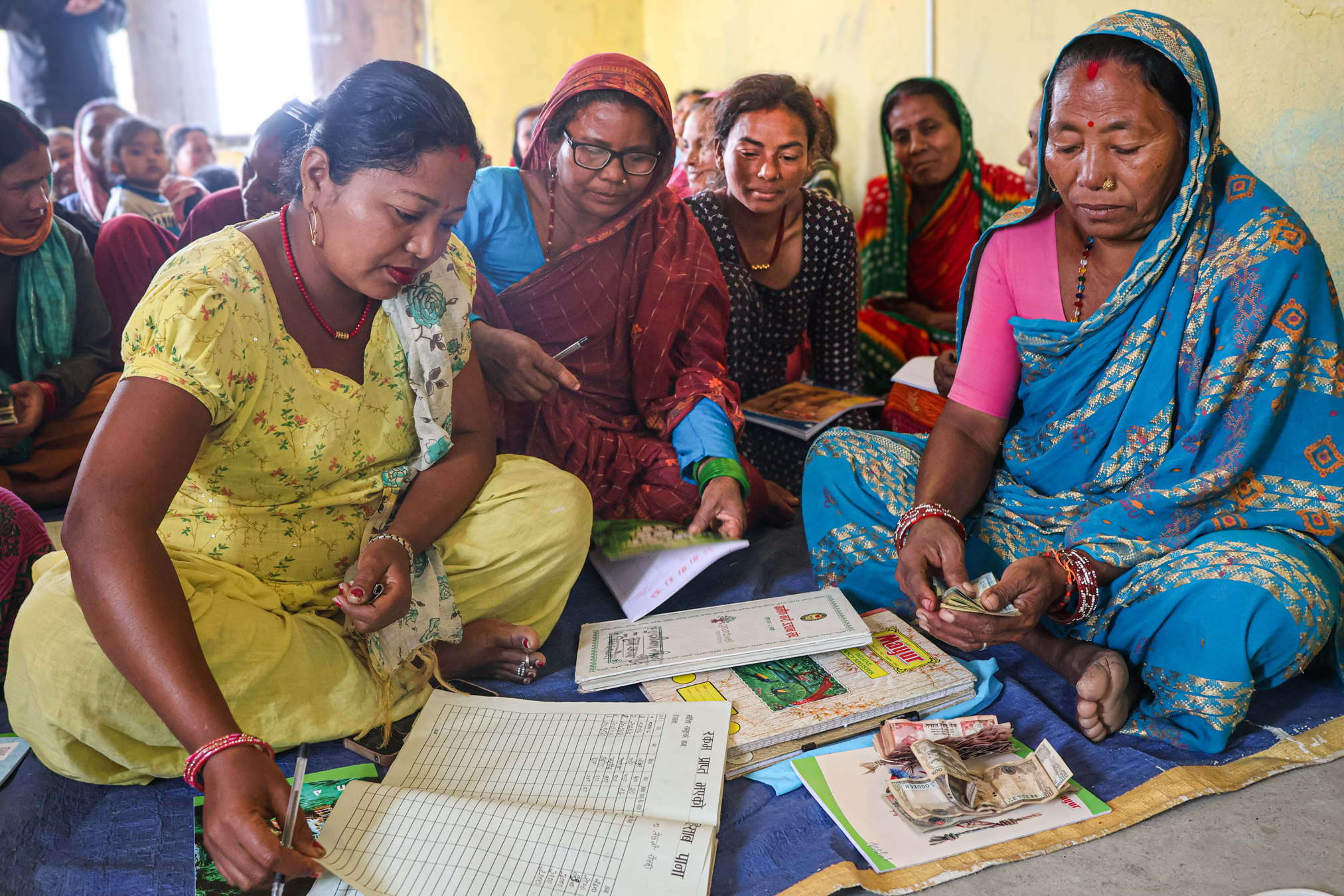
In Bailbas Chiran Tole, a village in rural Nepal, 26 women meet once a month under the thatched roof of the group leader’s home.
One by one, they put NPR 100 (about US$0.65) into a shared fund. They record loan repayments on a sheet of paper and consider new requests. If several women need money, they discuss who needs it most. They prioritize those with an emergency. In just 2 years, this credit and savings group has helped them move away from precarious daily wage jobs and even build their own business ventures.
It is a relatively simple system. But in an area where credit is often out of reach for women, it gives them a vital source of capital they collectively control.
Why access to credit remains difficult for rural women in Nepal
For low-income families in rural Nepal, getting a conventional bank loan can be difficult. Banks generally require evidence of stable income and collateral – requirements that can exclude smallholder farmers, daily-wage workers and people without property in their own name. A 2026 investigation by The Kathmandu Post found that these barriers continue to push some low-income borrowers toward informal lenders, where borrowing can carry much greater risks. The Kathmandu Post documented cases where loans were at 3% a month, and more than 24,000 borrowers have filed complaints against moneylenders over alleged excessive interest.
Women face specific constraints. While Nepalese law grants women and men equal rights to own land, women are still far less likely to own property, making it even harder for them to access loans.
“Even when we needed a loan, it was difficult to find someone willing to lend us money.”
A member of the Bailbas Chiran Tole women’s savings AND CREDIT group, nepal

How women’s savings and credit groups work in Nepal
A women’s savings and credit group is a small, locally run financial system created and managed by women themselves. It is especially useful in rural areas where formal banks may be far away, require paperwork or collateral, or do not offer loans small enough or flexible enough for a smallholder farmer. They are a central component of our programs with our local partners in Nepal.
A typical group usually brings together around 15–25 women from the same village. They meet regularly, often monthly, and each woman contributes a small amount of money to a common fund. The amount is deliberately kept low enough that members with very little cash can participate. The group decides its own rules: how much members save, how loans are approved, the interest charged, repayment periods, and how records are kept. Members can then borrow from the pooled savings and repay the money, usually with a modest interest or service fee that goes back into the group rather than to an outside lender.
These groups can make a large difference in a smallholder woman farmer’s life. Farming usually creates expenses before it creates income. A woman farmer may need seeds, tools, livestock feed, irrigation materials or extra labor at the beginning of a season, while the money from her harvest will only arrive months later. A small group loan can bridge that gap.
The same fund can also help when a goat becomes sick, a child needs medical care, school fees are due, or a crop fails. Rather than having to sell an animal or another vital productive asset at the worst possible moment, women can quickly access cash to cover an emergency.
A women’s savings and credit group lets rural women pool small amounts of their own money and turn those savings into a locally controlled source of credit, giving members a way to invest in their farms, respond to emergencies, and gain greater control over their livelihoods.

In Bailbas Chiran Tole, our local partner RWUA supported 26 women in forming a village savings and credit group. The members manage the money themselves: they keep the records, review loan requests, and collectively decide who receives a loan.
“We meet monthly, discuss issues together, and make decisions collectively,” a member explains. “If someone has an emergency or a specific need, we give priority to that person.”
Loans are made for three months and charged at 1% interest per month. Once the borrower repays the principal and interest, those funds can be lent again to another member. The women say the rate is considerably cheaper than other credit available to them locally.
Before the group, members say their days were “mostly limited to household chores and caring for our children. That was how our days passed.” They had few chances to earn an income, and running a household was hard. Now the fund covers essential needs to sustain their families and livelihoods, and explore new opportunities.
“Now, whenever we need money for household expenses, a child’s illness, school fees, or any other urgent need, we can use the group fund to cover those costs. We no longer have to beg others for loans.”
A group member, nepal
From a loan to working capital to launch a new business
Jabisa Khatun joined the group around a year and a half ago. At the time, her husband was working abroad. The money he sent home could take two or three months to arrive, leaving long stretches when Jabisa needed another way to cover the family’s expenses.
“Back then, I had nothing,” she says. “I didn’t have (…) any source of income.”
She had noticed a friend selling bangles and saw that the business could make money. But she needed capital to begin. So she borrowed from the group, bought stock, and started selling bangles and other small goods at local markets, reinvesting part of what she earned back into her business.
“I have built up my business, I sell my products, and I am able to educate my children,” she says. “I don’t need anything more than that.”
“Before, no one would lend me even NPR 5. Now, if I need money, people are willing to help.”
She continues to save NPR 100 every month with the group. And when she sees another woman considering starting something of her own, Jabisa encourages them to take the leap. She says, “sometimes, I encourage others to start their own businesses as well. If it has worked for me, I tell them that they can do it too. I tell them to give it a try and make an effort to move forward in life. I encourage them to keep working and find ways to progress.”
For Punyadevi Giri, a member of another community supported by our other local partner, BBP Pariwar, an NPR 25,000 ($163) loan provided the starting capital to open a small tea and snack shop she ran from her home.
She kept reinvesting what she earned, adding more products as her customer base grew. What began as a very small business has now become a proper hotel, from which she currently earns a fair income.
More than access to a loan
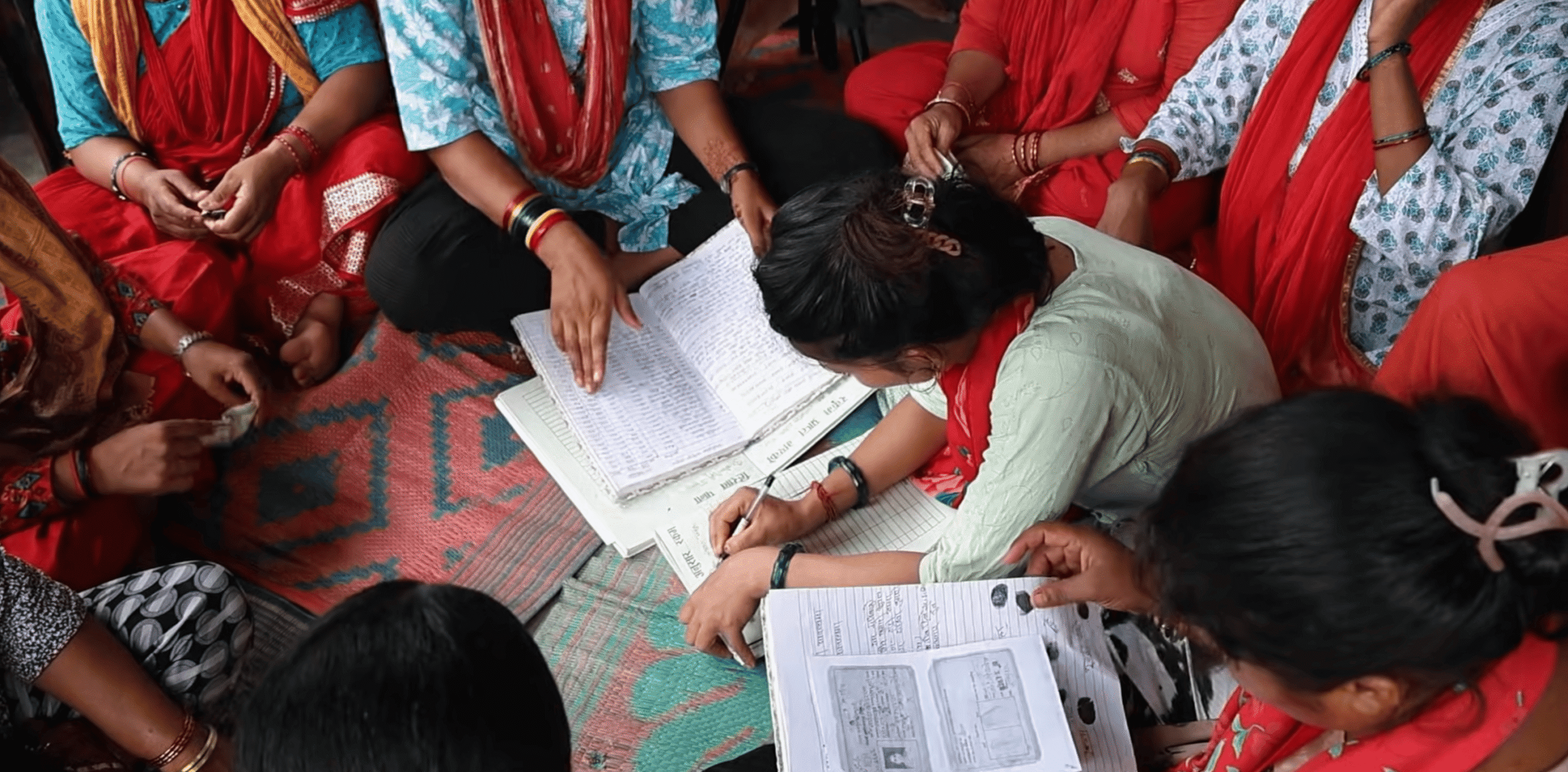
The monthly group meetings bring women together around more than finance. Members have participated in training on agroecology, livestock, financial management, and leadership. The group provides a regular place to discuss problems and possible solutions together.
For many rural women, access to money is also access to decision-making and collective power. Regular meetings build relationships, confidence, leadership, and a platform for women to exchange farming knowledge, organize activities, or address common problems. The group can become infrastructure for wider collective action.
What starts as a few pennies becomes collective capital: a locally controlled fund women build together and use to support one another’s farms, businesses, and priorities.