Ecuador

Ecuador

Context of Ecuador Rural Development Program

Ecuador placed 77th out of 169 countries on the United Nation’s 2011 Human Development Index, a table that ranks nations according to life expectancy, educational attainment, income per person, and other indicators perceived to demonstrate development. Macroeconomic indicators and rankings like the HDI show an upward trend that gives the impression that Ecuador is making generalized, lasting development gains. In many ways this is misleading.

Traditionally a farming country, Ecuador’s economy was transformed after the 1960s by the growth of industry and the discovery of oil. Yet, as in many other nations, the wealth and power of Ecuador’s elite grew prodigiously while the vast majority of Ecuadorians, especially the indigenous peoples and those of mixed descent, benefitted very little. Poverty and obstacles to local development in rural Ecuador are just as challenging as in other Latin American countries, such as Honduras, with much lower HDI and macroeconomic rankings.

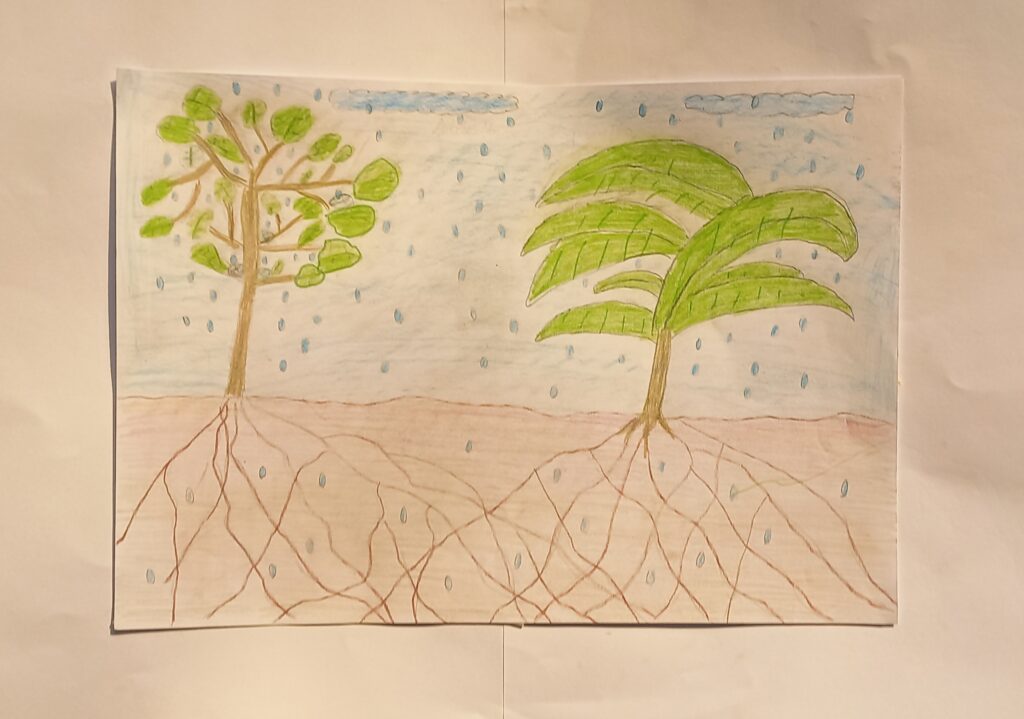
Soil, water availability and seeds (genetic material), the essential elements of all agricultural systems, are under increasing stress in the central and northern Ecuadorian Sierra regions where EkoRural works. Few places in the Western hemisphere will be more affected by climate change than the Andes. Already the region is experiencing fewer, more intense rainfalls, which have produced both drought and flooding and accelerated soil erosion and the loss of soil organic matter, diminishing the soil’s capacity to capture and filter water. At the same time, the loss of biological diversity is undermining agriculture in Andean communities. The vast majority of resource poor farmers are rapidly losing control over germplasm and genetic materials, the biological foundation for food security. Local seed sources are particularly important now that farmers must contend with climate change because biodiversity of traditional Andean crops often have a greater threshold for enduring drought and adverse conditions than do non-native crops. In recent years, seed conservation and availability have become more insecure as a result of modern market forces as well as government “modernization”, which has led to the dismantling of public services and have effectively increased the marginalization of rural communities.

Groundswell’s Response to Development Challenges in Ecuador

Biodiversity Seed Fair in Tzimbuto Ecuador

Biodiversity Seed Fair, Tzimbuto, Ecuador.

In light of this situation, Groundswell has supported EkoRural and its partners as they have come together to shine a light on the hidden opportunities embedded in existing healthy living and being. In particular, provided the context of overall socio-environmental decline, they are seeking to find families and communities that practice relatively healthy, financially successful, and sustainable lifestyles. Everywhere, in even the most difficult conditions of hardship and social marginalization, there are families that manage to live well and flourish. EkoRural searches out such “positive-deviance” and endogenous change processes as hope and inspiration for a new tomorrow. Working in both formal and informal spaces of policy (defined not through bureaucratic processes and legislations but rather more concretely as peoples’ daily practices), EkoRural and its partners aim to influence how people think, do, and organize for development. EkoRural strategically intervenes to influence how local practices in two interactive social spaces: 1) depth – families, neighborhoods, communities operating in geographies and 2) breadth – knowledge systems and social networks where people complete, collide, and collude to define and determine institutional norms.

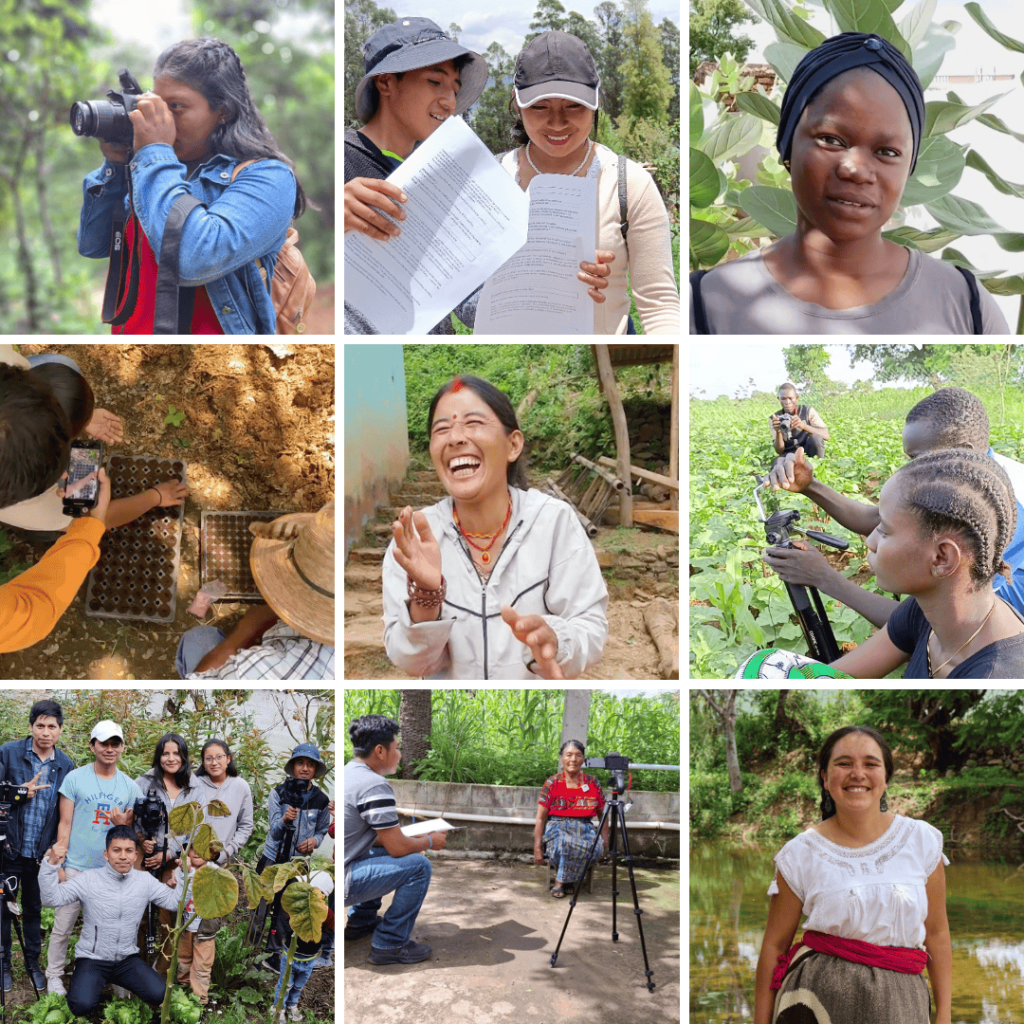
With Groundswell’s support, over the last two years EkoRural has been working with indigenous families in the Central Highlands to address what they describe as the accelerating loss of their culture due to the forces of modernization, especially the influence of external culture, migration, and industrial and market-distorted production. Through participatory analysis we identified the enhancement of agro-biodiversity as the most practical opportunity for communities, both indigenous and mestizo, to address these issues. Participants believe that gaining greater control over their biological resources and improving agro-biodiversity will enable them to overcome immediate production needs and defend their cultural interests, as expressed in their on-farm biodiversity and “seeds”.

During the inception phase Groundswell and EkoRural supported the participatory documentation of local knowledge and available resources (on individual farms and in the community), focusing on priority highland crops that are essential to family health and wellbeing. Special attention was paid to Andean roots and tubers (potatoes, ocas, mashua, melloco) and legumes, as well as small animals (chickens and guinea pigs) traditionally raised by small-scale farmers. We have worked with selected community groups to fill knowledge gaps and establish seed improvement, multiplication and exchange networks.

While strengthening the competence of people to enhance local biodiversity, we have succeeded in creating stronger ties among families in the management of their genetic resources and in connecting communities to circulate and exchange genetic material and knowledge. Also, women have gained new appreciation in their communities due the skills they have developed to conserve and improve crop varieties and seeds; seed banks and other forms of organization are emerging to strengthen local biodiversity; the linkages between urban consumers and their organizations with farmers and their organizations have contributed to improved access to healthy food and agro-ecology; and, a number of lessons emerged from this experience to inform policy decisions on food security and food sovereignty.

Ecuador Program Objectives 2013 – 2015

Elena Tenelema Farmer Leader Tzimbuto Ecuador

Elena Tenelema, Farmer Leader in Tzimbuto, Ecuador.

Over the next three years Groundswell will support EkoRural to deepen the work described above as a means of strengthening community resilience and healthy local food systems, while investing resources to reach new families in existing communities and linking experiences with broader efforts to influence practices in neighboring communities as well as shaping relevant policies.

More specifically, EkoRural, with the support of Groundswell, will strengthen the capacity of community-based organizations (CBOs) in 15 rural communities in Ecuador to lead their own development process. We will consolidate the work we are presently engaged in with six farming communities and we will expand to nine additional communities located in the Andean highlands in the provinces of Chimborazo, Cotopaxi, Bolívar, Imbabura and Carchi. In Chimborazo we will work in the communities of Naubug, Basquitay, and Galtes; in Cotopaxi, we will work in the communities of Carrillos, Compañía Baja, and Unalagua; in Bolívar we will expand our work in Simiatug Parish; and, in Imbabura and Carchi we will work in Ambuquí and El Alto, respectively. We will also include communities from Limones Parish in Esmeraldas Province, from which we can learn more about the “círculos alimentarios” (food circles) that are being implemented in extremely isolated areas. This process will be linked with the current Canastas Comunitarias platform of sustainable production, equitable access, and healthy food.

Between 2013 and 2015, the Ecuador program supported by Groundswell will directly benefit at least 500 families, mostly led by women, and another 2,000 family members will benefit indirectly from their involvement. This work will:

  • Strengthen local seed systems and strengthen community management of agrobiodiversity to improve resilience to climate change, disasters, and other external shocks;
  • Spread agroecological practices and promote more diverse local farming systems; 
  • Scale-up alternative food networks, such as the Canastas Comunitarias, that connect small-scale farmers to urban consumer markets in order to empower and increase income generation in rural communities while providing low-income urban families with access to healthy, affordable local food; and, 
  • Facilitate learning in other ways that reinforce food sovereignty, local food systems and local resilience.

This program will be implemented from the perspective and based on our conviction that everything we do must begin with the experiences, lessons, and priorities of the rural people we are working with, and that our actions must strengthen the capacity of communities to autonomously managed their seed systems and respond to the challenges modernization poses to their food security. 

The main outcomes will be: 1) increased local knowledge, as expressed in on-farm biodiversity management in the participating communities; 2) strengthened social autonomy and resilience of communities and farmers groups; 3) new social urban and rural relationships in benefit of healthy food and livelihoods; 4) strengthened on-going public policy debates about agro-biodiversity, seeds, and the promotion of agro-ecology through the grounded contributions, perspectives, and know-how of local groups of family farmers; and, 5) capacity-building and promotion of Community Management Biodiversity and Resilience.

As a grassroots organization, EkoRural primarily works with families, neighborhoods, communities and social networks for enabling social change from the “roots up”. Depending on emergent opportunities, EkoRural and Groundswell team up with like-minded people working in social movements, non-governmental organizations (NGOs), research organizations, government agencies and private industry. Our work in Ecuador is conducted in close collaboration with colleagues at: COPISA (Conferencia Plurinacional Intercultural de Soberanía Alimentaria), Wageningen University, Cornell University and local governments in Chimborazo, Bolivar, Cotopaxi, Imbabura and Carchi. At a global level, we are partnering with the Institute for Low External Input Sustainable Agriculture/Farming Matters (ILEIA, www.agriculturesnetwork.org) and Promoting Local Innovation (PROLINNOVA, www.prolinnova.net).

Below is a slide show outlining some of the key elements of Ekorural’s and Groundswell’s work in Ecuador: