In Nepal’s Terai Region, Women Farmers are Taking Back Control of their Seeds
In Sarlahi, a district in Nepal’s Terai region, women farmers are rebuilding control over their food supply by taking back ownership of their seeds. Their work is helping to protect generations of agricultural knowledge at risk of being lost forever.
Until the 1990s, Nepal was a seed-exporting country. Today, it imports 90% of its vegetable seeds, and of the 4,300 rice varieties its farmers cultivated over decades, only around 150 remain.
The shift began in the 1980s, when hybrid seeds arrived alongside the broader wave of Green Revolution technologies sweeping South Asia. The promise was real: hybrid varieties offered yield gains of 25–30% compared to traditional crops, matured faster, and produced food that looked more uniform and marketable. Nepal’s population was growing rapidly—from 15 million in 1980 to nearly 24 million by 2000—and, as arable land shrank due to urbanization, farmers were under pressure to increase output. For many, hybrid seeds appeared to be the practical answer.
But these gains came with serious long-term trade-offs. Unlike local varieties, hybrid seeds can’t be saved or replanted. Farmers need to repurchase every season, on top of rising costs for the fertilizers and pesticides that hybrid seeds require. As Tara Bahadur Ghimire, principal scientist at Nepal’s Agriculture Research Centre, noted in The Kathmandu Post, some hybrid varieties are specifically developed so they cannot technically multiply, locking farmers into annual repurchase by design.
The ecological costs compounded over time. Years of intensive hybrid cultivation stripped soils of nutrients and made crops more susceptible to disease. Nepal has experienced several incidents of large-scale crop failure linked to imported hybrid varieties, including the destruction of paddy across 16 districts in Bhaktapur in 2013, traced to a Chinese hybrid variety that had been certified for a different region. And as local varieties disappeared from fields, they faded from memory, threatening the loss of generations of knowledge about how to grow, save, and adapt them to local conditions.
Seed specialist and agronomist Madan Rai has been warning about this trajectory for the region. “A country can never be food secure if it isn’t seed secure,” he told The Kathmandu Post in 2019. “It’s important that we as a country are self-sufficient on seeds to truly become food secure.”
Who bears the cost: Nepal’s smallholder farmers
The consequences of hybrid dependency fall most heavily on smallholder farmers. In Nepal, that means most farmers. According to the Food and Agriculture Organization, 2.7 million smallholder farms account for 70% of the country’s food production. A 2020 study on climate adaptation found that smallholders constitute more than 50% of Nepalese farmers, with the majority cultivating less than 0.5 hectares per household.
Hybrid seeds are primarily developed for large-scale, industrial farming conditions. Their yield advantages are most consistent when farmers have access to controlled irrigation and steady supplies of chemical fertilizers and pesticides—resources that most smallholders in Nepal lack. According to the Asian Development Bank, 71.6% of Nepalese smallholders rely on informal credit sources, like private moneylenders, to purchase agricultural inputs. When harvests are poor or market prices drop, repaying these debts can become unmanageable. As a result, any initial financial benefit from higher yields is often offset over time by rising input costs and mounting interest payments.
Why local seeds matter for smallholder farmers
Local seed varieties offer a fundamentally different proposition. Selected and adapted over generations to specific soils, microclimates, and pest pressures, they don’t require the same level of chemical inputs to perform. They can be saved after harvest and replanted the following season, eliminating the annual seed purchase. And because they have evolved alongside local farming conditions, they are generally more resilient when weather patterns shift—an increasingly urgent consideration as climate change disrupts the monsoon and dry seasons in the region.
There is also a market dimension that tends to be overlooked. As Mongabay reported, local demand for crops grown from native varieties has been growing. Consumers increasingly recognize the difference in flavor and nutritional quality and are willing to pay more for it. “Crops from hybrid seeds don’t taste or smell as good as local varieties,” former government seed official Dila Ram Bhandari told Mongabay. “People are willing to pay more for local crops. Once there’s demand, there will be supply.”
The challenge is that local varieties, once abandoned, do not come back easily. Seeds are living knowledge. When a variety disappears from a field, communities’ deep understanding of how to grow it, store it, and adapt it goes with it.
“A country can never be food secure if it isn’t seed secure“
Seed specialist and agronomist Madan Rai, via The Kathmandu Post
The role of community seed banks
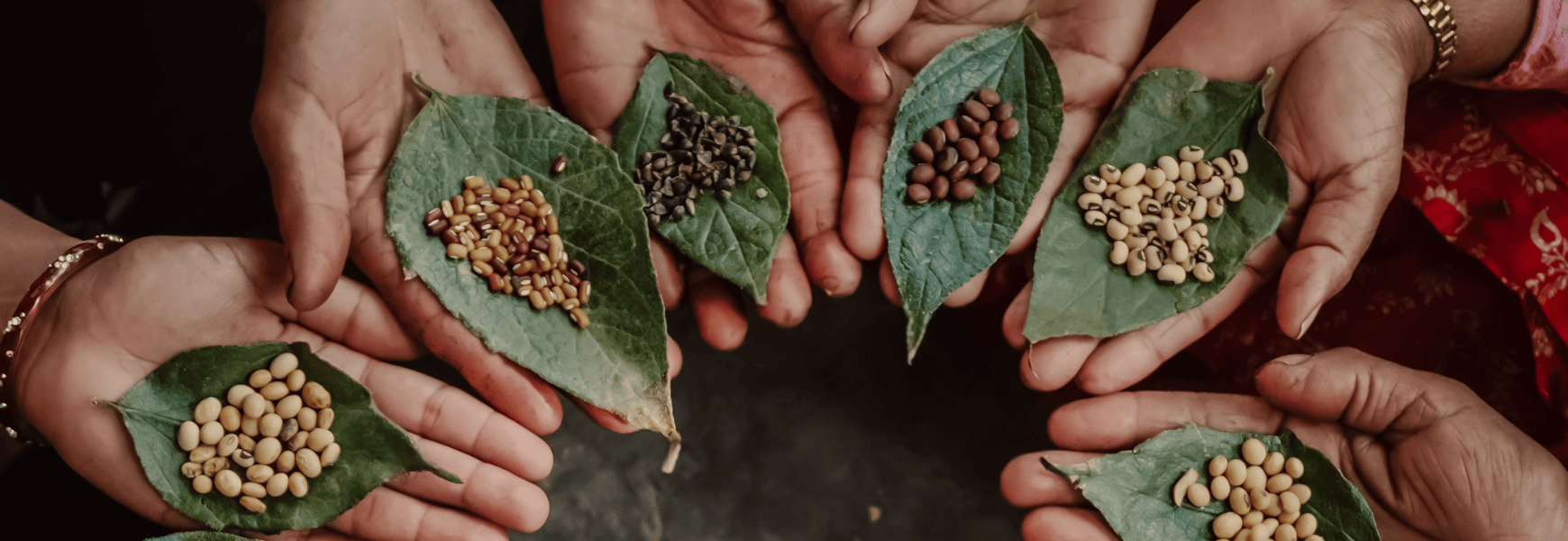
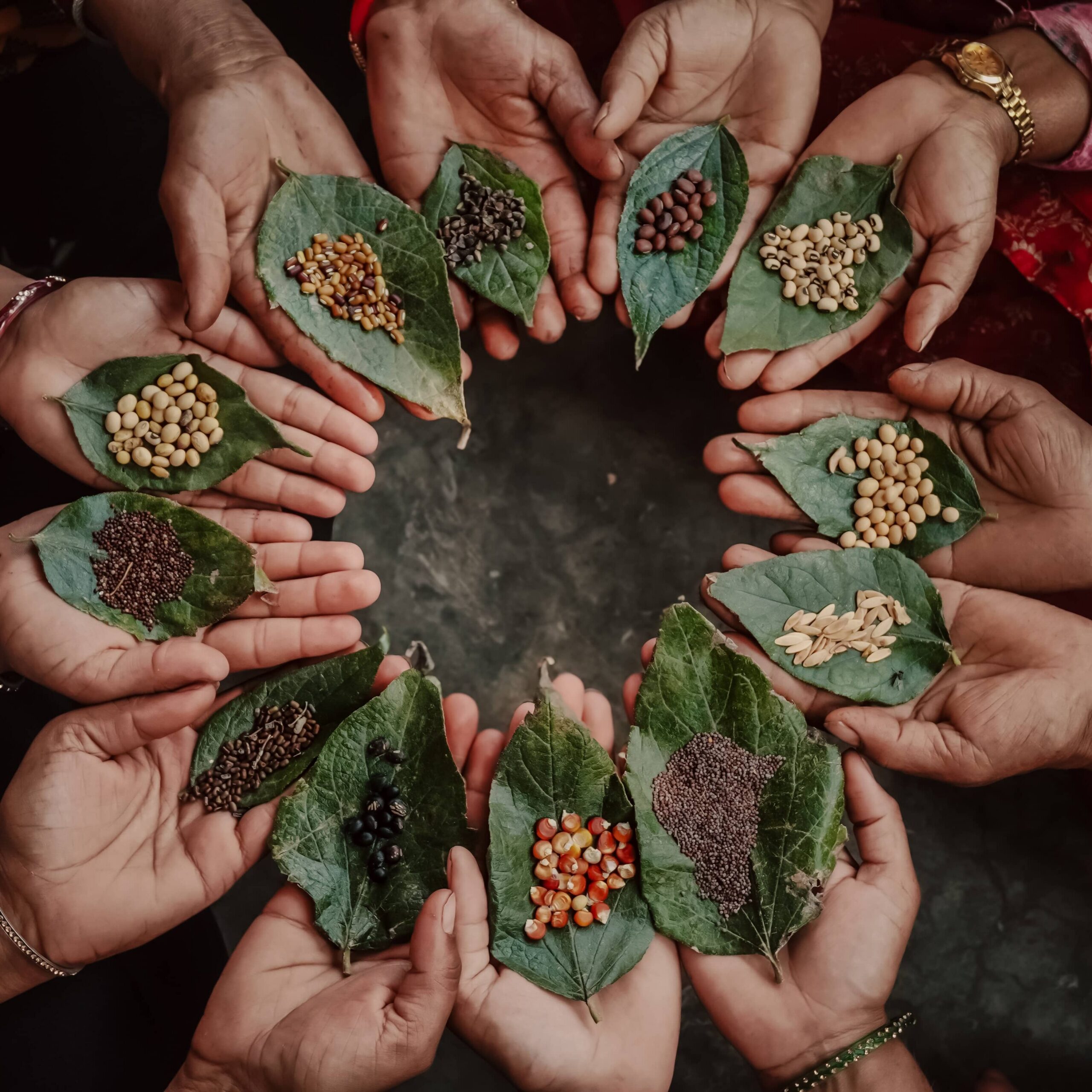
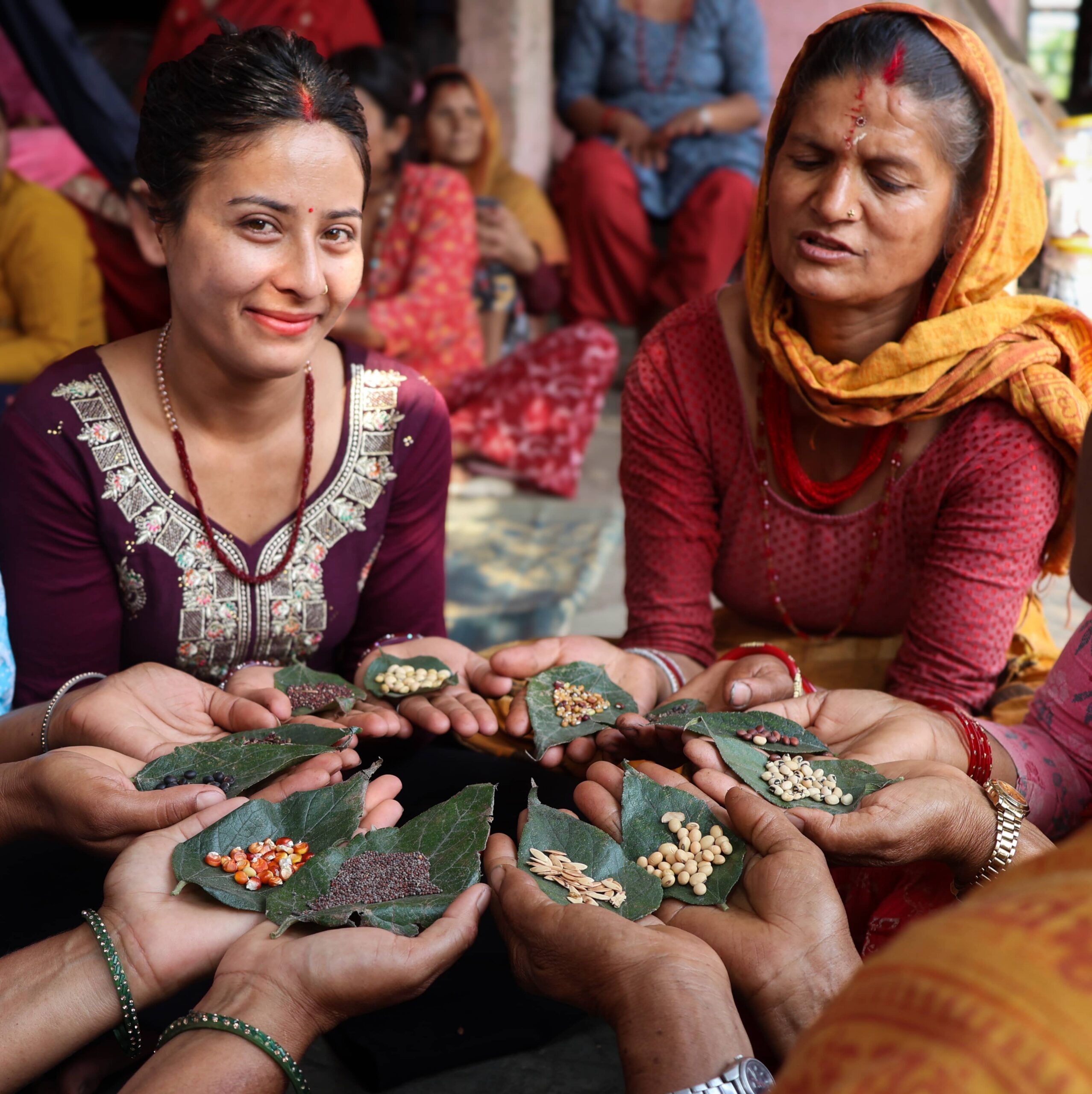
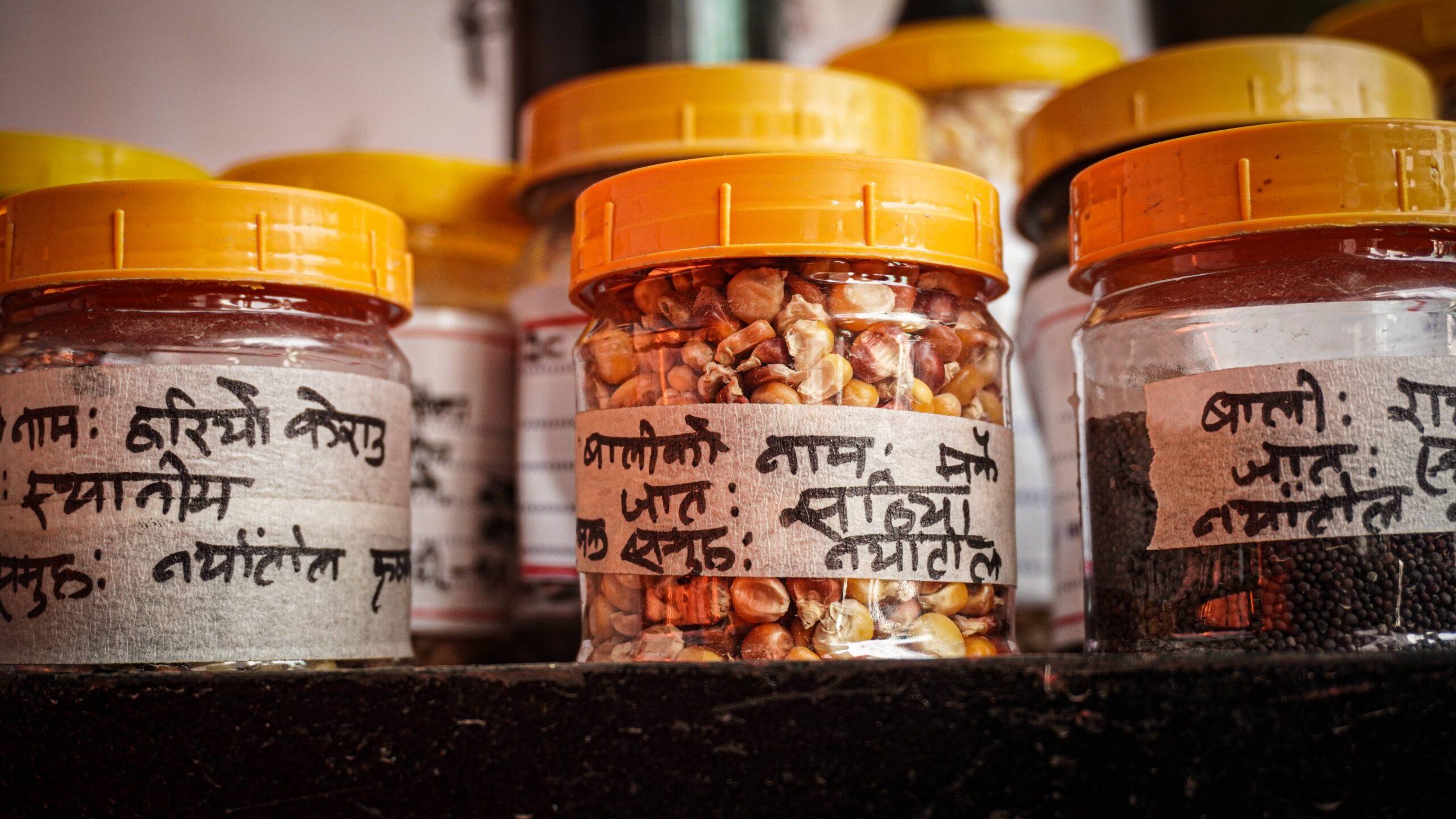
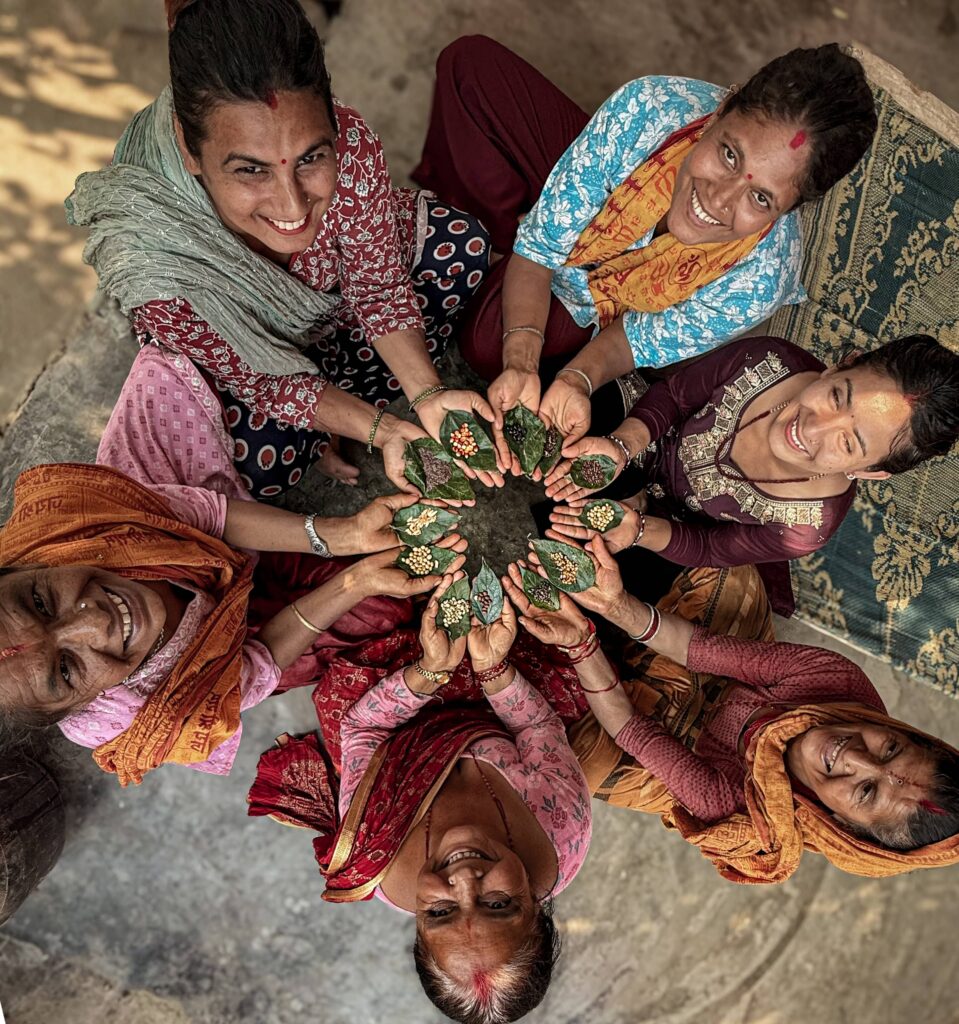
Rebuilding that knowledge starts at the community level, and women often play a leading role. In Sarlahi, women farmers are working with our local partner RWUA to do exactly that. Through a network of 13 community seed banks managed entirely by women’s groups, farmers are collecting, storing, and exchanging local varieties that conventional agriculture had pushed to the margins: chickpea, pigeon pea, maize, sesame, millet, cowpea, black gram, amaranthus, okra, and more.
Women’s groups first received training on why local seed conservation matters and how community seed banks work. Then they put it into practice themselves. At each group meeting, farmers bring seeds from their own fields. Some are exchanged on the spot. The rest are stored and made available for borrowing at planting time, then returned after harvest, ensuring seeds remain available locally and circulate between farmer communities.
Women are not just participants in this system: they run it. They decide what to store and share, and how the banks are managed. This distinction matters when discussing food sovereignty—the right of communities to define their own food systems rather than have them shaped by external markets or policies. At its core, food sovereignty is not only about access to food, but also about who holds the power to decide how it is produced. Seed sovereignty applies that same principle to seeds specifically: the right of farmers to save, use, and exchange the varieties they have developed and selected over generations, free from corporate or market dependency.
“Local seeds give us independence, security, and dignity.“
Tulasa, farmer participating in her local women’s group with RWUA
What changes when farmers control their seeds
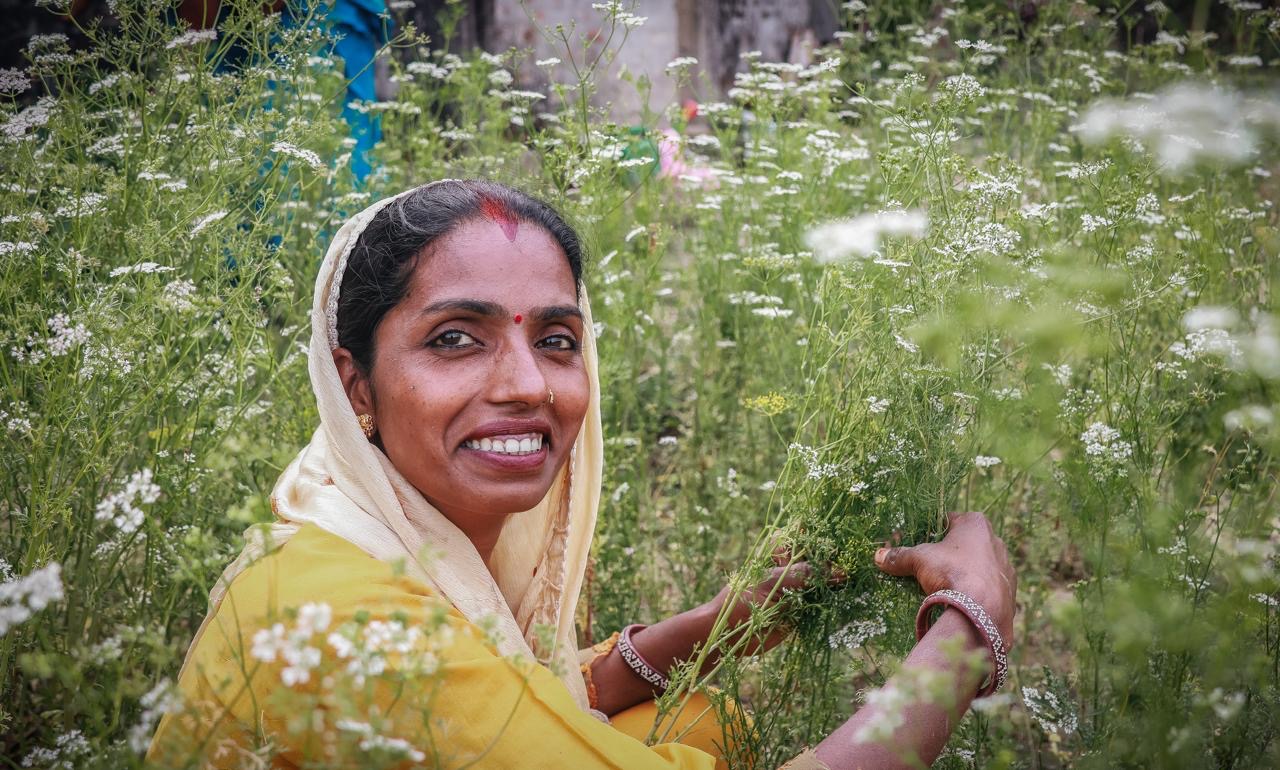
Tulasa Dhamala Pahadi farms in Jiyajor, Sarlahi. Before her group built their seed bank, she paid $5–6 per kilo for hybrid seeds every planting season, and sometimes couldn’t find them at market at all. Now she takes what she needs from the group, plants it, and returns seeds after harvest.
“Food grown from local seeds tastes better and is more flavorful,” she says. “Now, because we collect and store seeds within our group, seeds are much cheaper. It also saves time. We don’t have to go to the market anymore during planting season, and many times seeds are not even available when we go.”
The impact extends beyond cost savings. When supply chains break, whether due to market disruption, seasonal shortages, or a crisis, farmers with community seed banks have a fallback. “The main reason we preserve local seeds is for security,” Tulasa explains. “We no longer worry about whether seeds will be available in the market. Even if we cannot find seeds in the future, we can plant the local seeds we have saved ourselves. This makes us self-reliant and ensures our food security. During times of crisis, we feel safe, we don’t have to sleep hungry.”
Tulasa also shared: “My message to farmers who only depend on hybrid seeds is this: hybrid seeds may not always be available. That is why we formed a group and preserved local seeds. If we protect and store indigenous seeds, we can continue farming with our own seeds, our fields will not remain fallow, and our families will not go hungry. (…) Local seeds give us independence, security, and dignity.”
Watch Tulasa explain her work in this video:
Seeds as the foundation of food sovereignty
The work in Sarlahi is part of Groundswell International’s broader commitment to farmer-led agroecology across 11 countries in Latin America, West Africa, and South Asia. Across these regions, a common thread runs through the most resilient farming communities: they have retained, or are actively rebuilding, control over their seeds.
Seed sovereignty is a practical foundation for food security, ecological resilience, and community autonomy. Local varieties have evolved over generations to adapt to specific soils, microclimates, and pest pressures. When they disappear from fields, that knowledge can fade with them. When they are preserved and shared within communities, they become a living resource that no supply chain disruption, price spike, or corporate decision can take away.
Go further: watch this video on the wider work around women-led seed conservation in Nepal
This article was produced with reporting support from RWUA (Rural Women Upliftment Association), our local partner in Nepal. Co-authored by Maylis Moubarak and Barsha Koraila.
Invest in smallholder farmers to spread real solutions
Your gift will equip smallholder farming communities across the Global South with the tools, training, and confidence to drive the shift toward regenerative, equitable food systems, where their voices and solutions lead the way.