Practical Lessons from Pacho Gangotena’s Agroecological Farm in Ecuador
From anthropologist to one of Ecuador’s most respected agroecology trainers, Pacho has taught over 32,000 farmers to farm with nature instead of against it. And his approach is surprisingly accessible.
As part of our regional conference in Latin America, we visited Pacho Gangotena’s agroecological farm, a short drive from Ecuador’s capital, Quito. Finca Chaupi Molina is not just any agroecological farm. Over 32,000 Indigenous farmers and technicians have crossed its grounds to learn from Pacho and transform their own farms and chakras into healthy, regenerative systems.
Harmony is the first word that comes to mind when crossing its humble gates. Striking simplicity and care were applied to every corner of this land: the animals, the house, the meals, the farm, and the garden…everything in sight was flourishing. We gathered in a small clairière under the trees near Pacho’s house for lunch before the learning visit. White tablecloths covered small round tables, each one set with fresh flowers from the garden. Large wooden bowls of salad, with every leaf and vegetable from this land, were set out on a serving table.
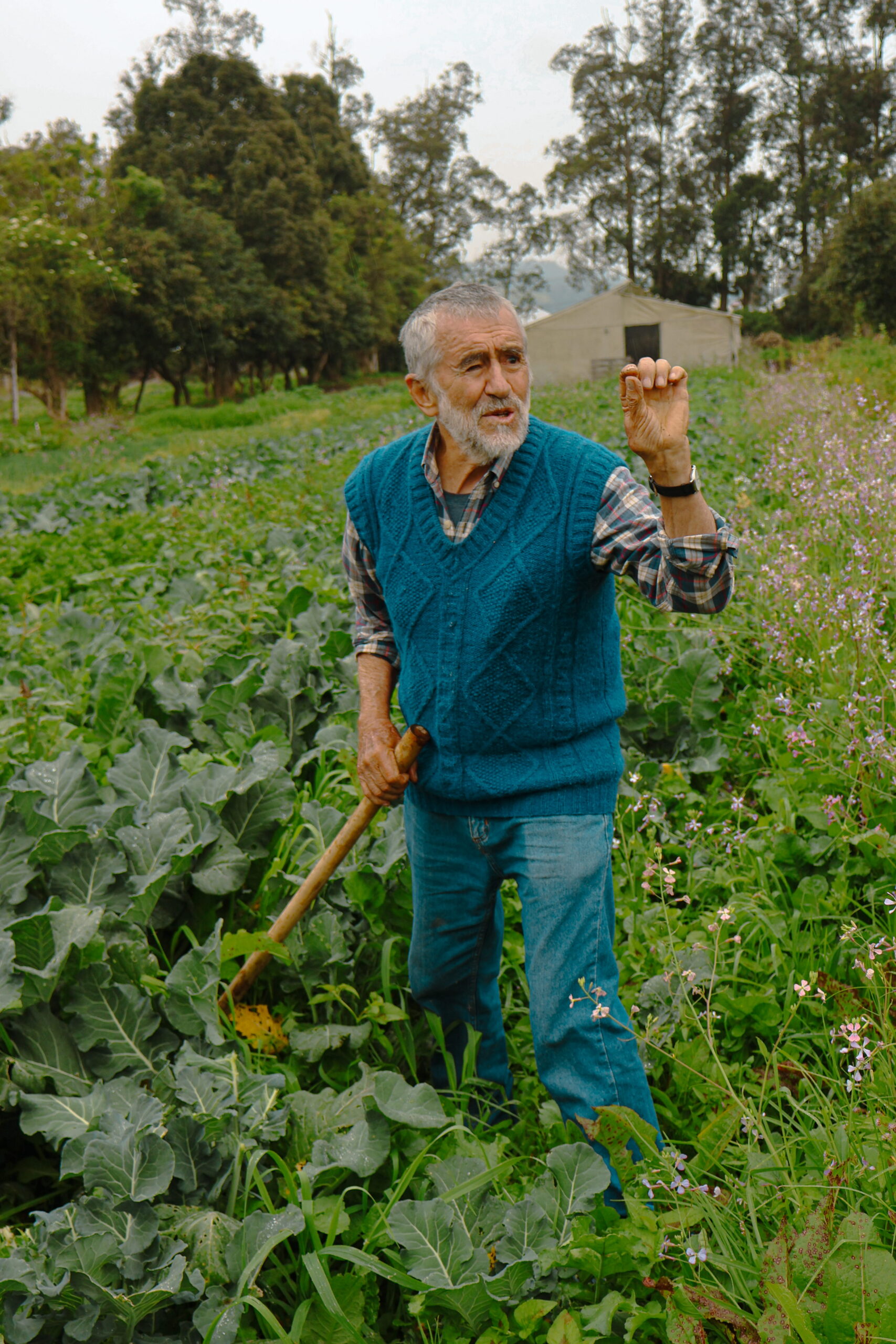
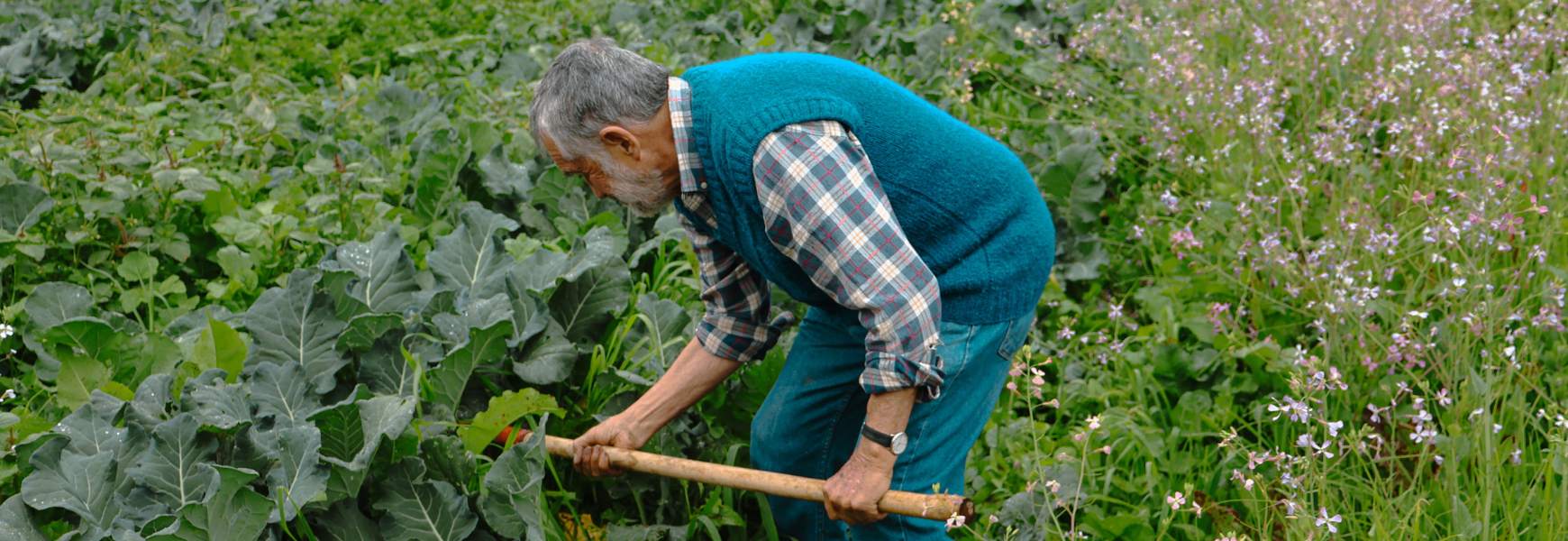
Pacho Gangotena came to greet us, wearing a worn teal sweater over a plaid shirt, his boots caked with mud, dirt under his fingernails. He spoke and moved with the confidence of someone who has spent decades proving a point.
Before becoming one of Ecuador’s most respected agroecology trainers, Pacho was an anthropologist with no experience in organic farming. Thirty years ago, when he saw the impact of conventional agriculture on local farmers, he looked for alternatives. But agronomists told him his ideas were naive and that change was “impossible” at this point. So he and his wife Maritza sold their house and car to buy degraded land and prove them wrong.
Chaupi Molino became both their home and their experiment: a living demonstration that we can grow food and heal degraded soil without chemicals, and that it’s not that complex after all.
Ecuador’s agrarian reform and the impact on local farms
After lunch, Pacho invited us into a small room with a whiteboard and a few well-worn books on a wooden table. He took us back to when agrarian reform arrived in Ecuador a few decades ago. Indigenous communities finally got access to land, but had to buy it back from the government. To pay for it, many sold their animals.
“There was a terrible depopulation of animals, almost 75%,” Pacho explained. “Cows, rabbits, guinea pigs, sheep, donkeys… [farmers] sold them to be able to pay [for land.]”
With the animals went the manure, central to soil fertility. Government technicians started promoting chemical fertilizers and monoculture. “‘Potatoes, compañero, this zone is just for potatoes,'” Pacho said, mimicking them. The traditional chakra system—mixed crops adapted over centuries to local conditions, with livestock central to its cycle—was being replaced by a model that depleted soil fertility, forcing farmers to become increasingly dependent on purchasing external inputs to grow crops.
When Pacho witnessed this change, he couldn’t remain on the sidelines. He asked his colleagues, why not return to manure and polyculture—methods that have sustained Andean communities for centuries? But every technician gave the same response: “Impossible. You may know anthropology, but you don’t understand farming.”
So Pacho decided to prove them wrong.
Learning from books and nature
Pacho turned to books as a starting point. One particularly influential book for him was An Agricultural Testament by Sir Albert Howard. “He was a brilliant young man who studied agronomy at Cambridge,” Pacho explained. “The English government hired him to go to India and China to teach those ‘poor’ people how to farm. They thought they were ignorant. But this guy was brilliant. When he arrived, he said, ‘First I’m going to see how they cultivate.’ Howard discovered that Chinese farmers had maintained soil fertility for 4,000 years through composting. “He sent a message back to the English, and excuse my expression, sent them to hell.” Howard then played a pivotal role in establishing composting as an essential practice for maintaining soil fertility.
The second influence was Ana Primavesi, who became known as the master of soil microbiology. Her insight became Pacho’s framework: the three M’s. Materia orgánica (organic matter), microorganismos (microorganisms), minerales (minerals). “If you have these three things, you have fertile soil.”
And for farmers practicing agroecology, Pacho believes the main goal is “to transform the soil.” He points to the forest as the best teacher.
“If you go into the mountains, into the forest, you’ll find the best trees on the planet and tremendous greenery. How does the forest fertilize itself? With the same material it produces,” Pacho explains. In other words, forests stay fertile by recycling their own fallen leaves and other plant material back into the soil.
By watching how forests and jungles work, farmers can learn how nature renews itself and apply those lessons to their own land. “Organic matter is the first thing the forest produces. Then there are little creatures that degrade that organic matter, they feed themselves, and that’s where [the cycle] begins. Those are the microorganisms. And the third thing the forest needs is minerals, which are in the soil itself.” This shows the importance of all three M’s.
The forest also teaches why diversity matters. “Monoculture is against nature,” Pacho says. Wild forests don’t have straight rows of just one tree; many kinds grow together, helping each other. So why would farmers plant just one crop?
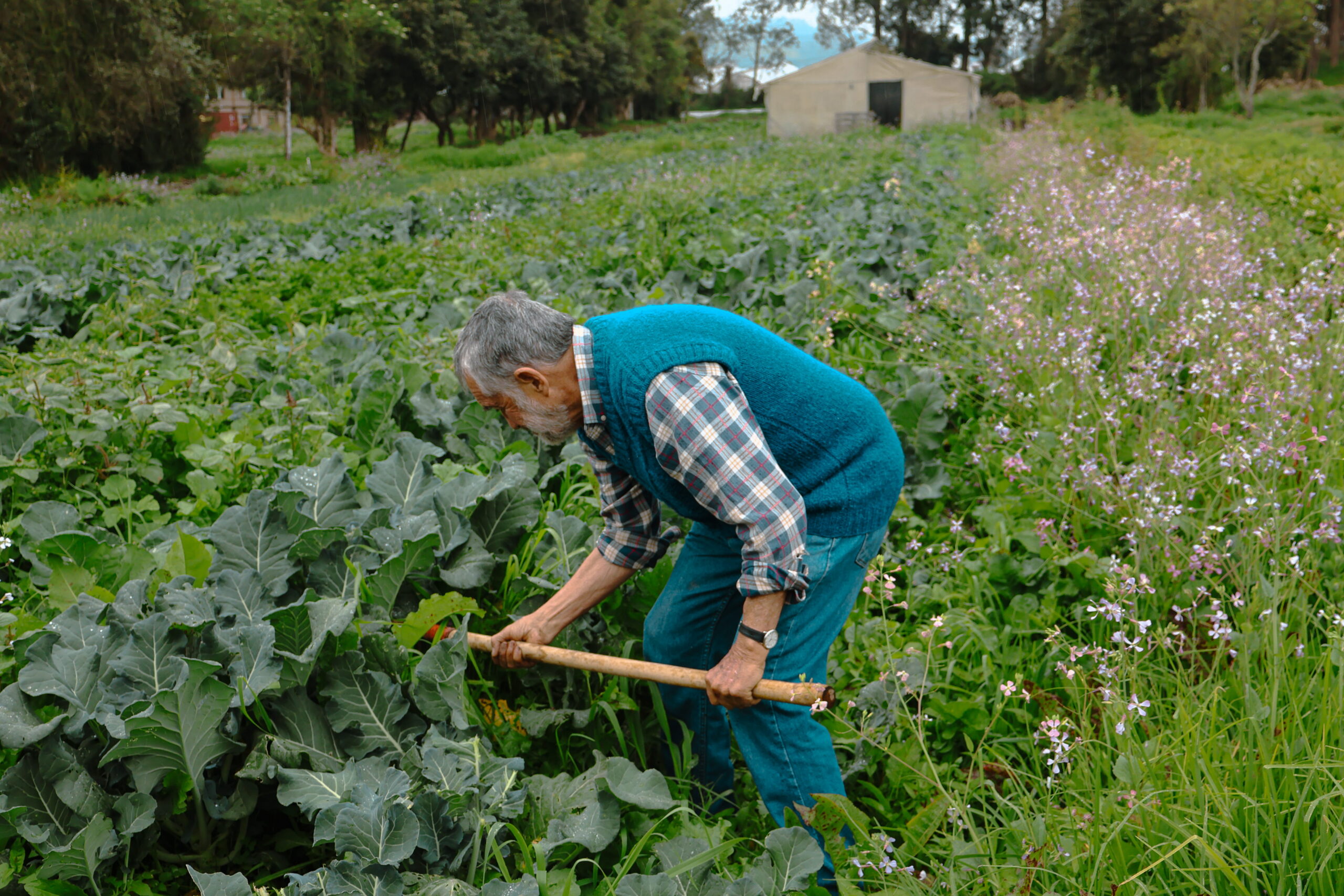
At Chaupi Molino, there are over ten main crops in each area, and even more kinds of plants, including some that most farmers would pull out as weeds. This variety is intentional and planned.
“The other point that’s vital is design,” Pacho says. “Ask yourself: I have this piece of land. Where am I going to put things? How will they interact?” Design is also about creating habitats for the insects and animals that create balance. “How many species of insects are in a jungle? Millions. And yet there are no pests. So it’s all about balance.”
After this short masterclass on soil health, Pacho brought us outside to see all of these ideas in practice.
“How many species of insects are in a jungle? Millions. And yet there are no pests. So it’s all about balance.”
Pacho Gangotena
Manure, manure, manure
If there’s one thing at the heart of Pacho’s approach, it’s manure. For Pacho, manure is the foundation of a thriving, living farm.
Manure provides nutrients, feeds the soil’s microorganisms, and helps the land recover after years of chemical use. It supports soil structure and fertility, enabling it to retain water and produce healthy crops.
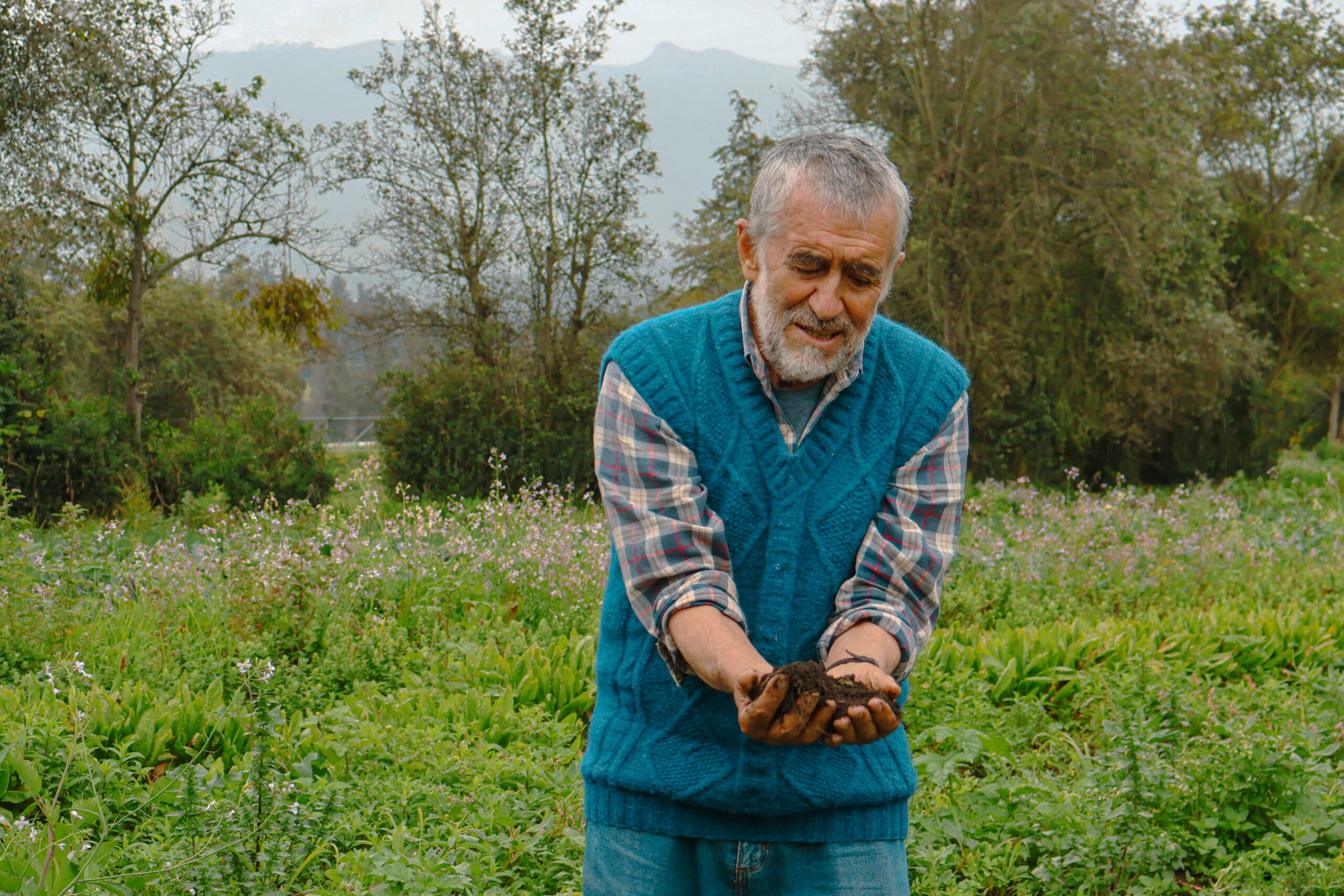
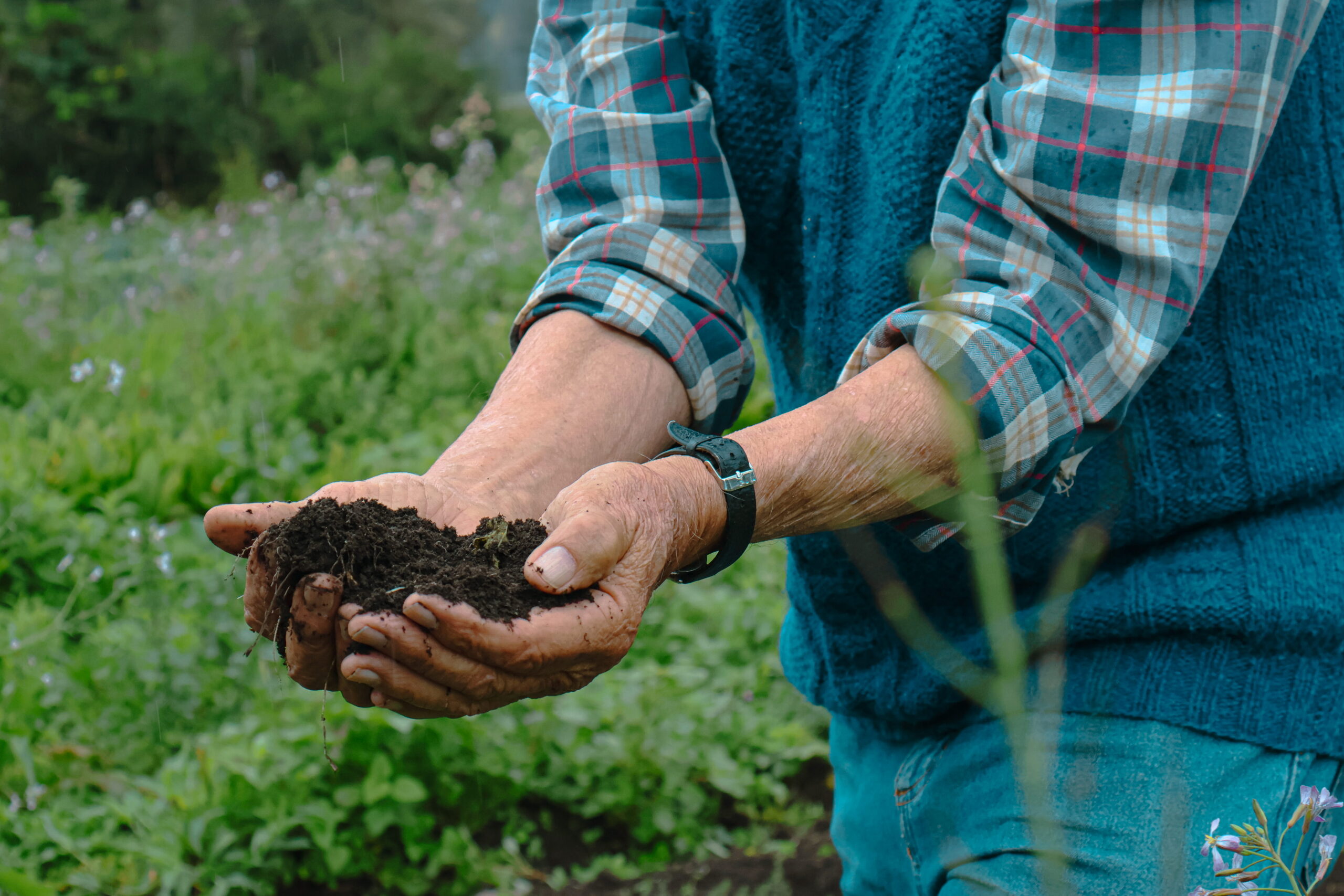
To show us what he means, Pacho crouched down in a chunky row of broccoli and scooped up a handful of earth. It was almost black, alive with earthworms. “When we started, this soil was full of chemicals. It was dead,” he told us. “We began organic from day one. But the first two years were terrible. In the third and fourth years, it started to produce. The soil changed.”
Now, the farm grows more than 40 vegetable varieties and produces 20 products sold at local markets. When Pacho started, the soil had just 1% organic matter, essentially exhausted. Now, Pacho says they have “between 10 and 12% organic matter”—clear proof the soil is healthy and alive.
“We produce about 20 tons of organic matter per hectare each year,” Pacho explained. “And who gives us that? The cows!”
He walked us to a small barn where his cows seemed genuinely content. “How much does a cow eat? Ten percent of body weight. A good-sized cow can put 150 pounds in her stomach. And 75% of that has to come out.” In other words, one cow produces about 100 pounds of manure per day, so 365 sacks a year, enough to fertilize a whole hectare of land.
“For a farmer, this is marvelous information,” Pacho said. “If I have one cow, I can fertilize my farm. If I also have guinea pigs, rabbits, a pig, and a donkey…(…) There’s no need for external inputs.”
Looking around at his farm, it was clear that everything worked together: the flowers, the animals, the trees, the fruits, and the vegetables. Once the system is set up, it becomes self-sustaining. As Pacho puts it, “Conventional agriculture consumes energy, natural agriculture generates energy.”
“Conventional agriculture consumes energy, natural agriculture generates energy”
Pacho Gangotena
Making knowledge accessible
Near the end of our visit, Pacho told us a story.
“On the last day [of my trainings], I always ask, ‘What are you taking home?'”
“[A young woman] looked at me and said, ‘Compañero Pacho, you have a head, and I have a head. You have hands, and I have hands. You have a heart, I have a heart. You have land, I have land. You have animals, I have animals. So why is your farm so beautiful and mine so horrible? In these three days, I’ve realized, I have everything I need to have a beautiful farm.'”
That’s why 32,000 farmers have made the trip to Chaupi Molino. Not for miracles, but for knowledge of what makes a farm truly work, for people and nature.
Practical principles for agroecological farmers
For farmers or practitioners wanting to apply what Pacho has learned, here are the main takeaways form our visit:
The Three M’s are non-negotiable for healthy soil
- Organic matter
- Microorganisms
- Minerals
Animals can significantly reduce or eliminate the need for synthetic fertilizers:
- A well-managed, healthy cow can produce enough manure and urine over a year to fertilize roughly 0.5–1 hectare, depending on crops and soil needs
- Small animals (chickens, rabbits, guinea pigs, pigs) add to the system
Protect soil structure:
- Limit the use of disc plows as they disrupt microbial life and earthworm populations
- Use only shallow cultivation with teeth
- Keep soil covered with living plants or mulch
Design for diversity:
- Plant polycultures, not monocultures
- Create habitats (hedgerows, flower strips, small forests) for beneficial insects
- Let “weeds” coexist. Many are useful, and they feed the soil when they die
Be patient with the timeline:
- Years 1-2: soil recovery, difficult period
- Years 3-4: usually a turning point, production increases
- Year 5+: system becomes self-sustaining
Learn by observing:
- Study how forests maintain fertility without inputs
- Ask “what would mother nature do?”
- Talk with neighboring farmers and share observations
Watch this video for a full overview of the many lessons Pacho shared during our visit to his farm:
Resources for going deeper
Books Pacho Gangotena recommends:
- An Agricultural Testament by Sir Albert Howard (also available in Spanish as Testamento Agrícola)
- Manejo Ecológico del Suelo by Ana Primavesi
- Works by Miguel Altieri (Chilean agronomist specializing in agroecology)