

Traditional Recipes from Nepal and India: Four Dishes Shared by Women Farmers
A woman farmer’s kitchen holds wonders: centuries-old knowledge passed from woman to woman. How to cook local crops in a given season, how to nourish a family on what the land provides near home.
Her kitchen moves with the weather – outside on a sunny day, inside in a storm. She tends it daily, often with pride: a space she can call her own, but did not always claim. She spends hours there, on top of her work in the fields and at home, and none of it is paid.
That work, and the knowledge behind it, rarely gets recognized as agricultural expertise. Yet knowing how to turn a harvest into nourishing meals, make the most of local crops, and pass food traditions on to the next generation is as central to sustaining local food systems as caring for the soil that provides our food. So we asked women farmers in Nepal and India to share some of their favorite traditional recipes, with food they grow in their own gardens.
Whether you’re looking to discover traditional recipes from Nepal or India, or try new ways to prepare vegetables, these four recipes offer a chance to bring a little of that culinary knowledge into your own kitchen.
In this article:
Traditional Recipes from Nepal
Traditional Recipes from India
Traditional Recipes from Nepal
In Nepal’s Madhesh region, vegetables such as pumpkin leaves and pointed gourd feature in local cooking. Often prepared with simple batters and spices, these ingredients become crispy snacks and side dishes enjoyed alongside everyday meals.
1. Pumpkin Leaf Taruwa (फर्सीको पातको तरुवा)
Recipe shared by Goma Khadka, Sarlahi, Nepal
Pumpkin leaves are the star of this traditional Nepali dish. Coated in a spiced chickpea flour batter and deep-fried until crispy, pumpkin leaf taruwa makes a delicious snack or accompaniment to a traditional dal-bhat meal (rice and lentils). Unlike recipes that use only the pumpkin itself, this traditional preparation uses its tender leaves as well, leaving nothing to waste.
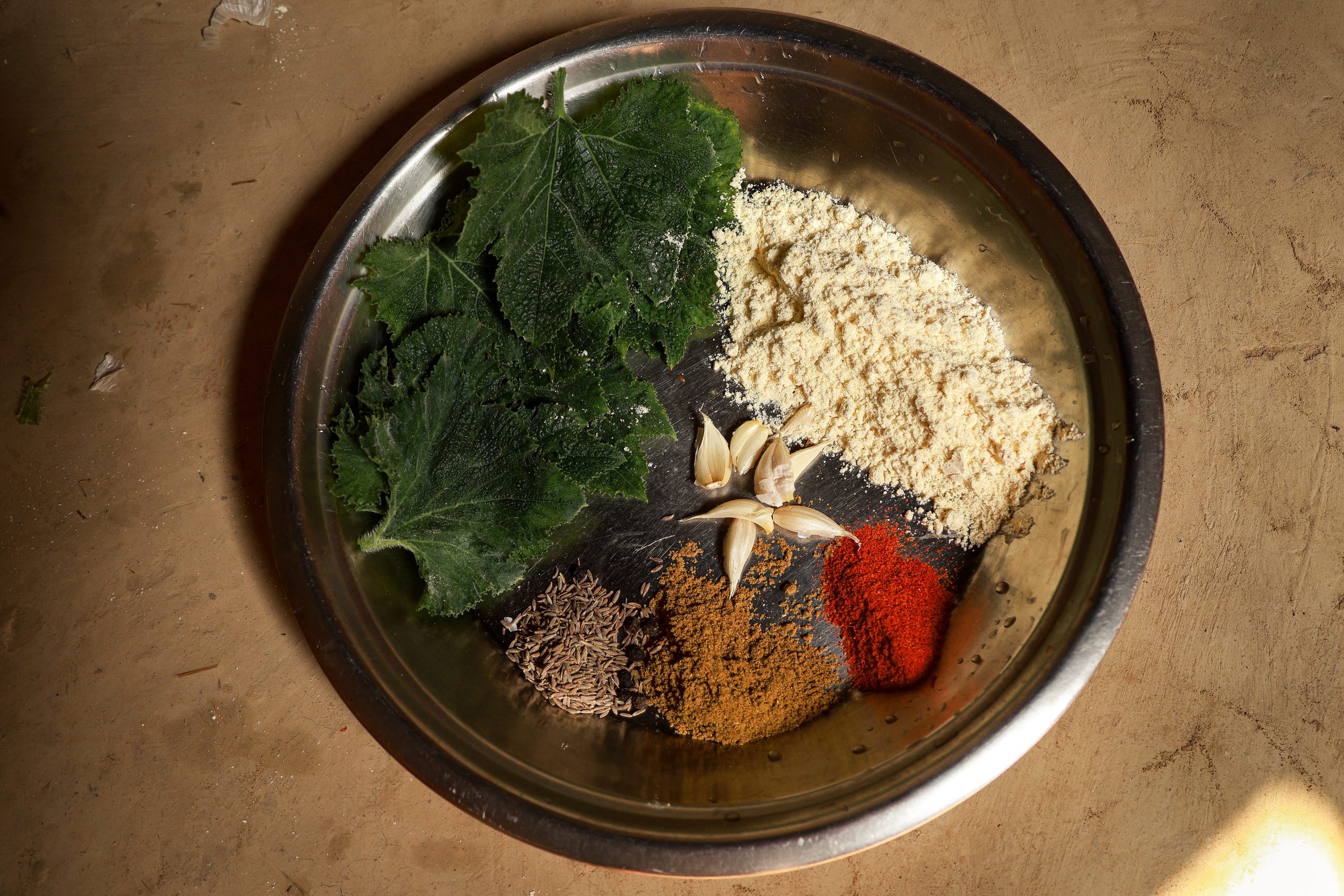
Ingredients
For 250 g of tender pumpkin leaves
- 250 g tender pumpkin leaves
- 150 g gram flour (besan)
- 15 g garlic (approximately 5–6 cloves)
- 5 g cumin seeds (approximately 1½ teaspoons)
- 1 teaspoon chilli powder, or to taste
- ½ teaspoon turmeric powder
- Salt, to taste
- Approximately 120 ml water
- Cooking oil, for deep-frying
Preparation
- Clean the leaves. Select fresh, young pumpkin leaves. Wash thoroughly to remove dirt and drain well.
- Prepare the garlic and cumin. Crush the garlic cloves and cumin seeds together into a fine paste.
- Make the batter. Place the gram flour in a bowl. Add the garlic and cumin paste, chili powder, turmeric and salt. Gradually add water, mixing until you have a smooth, thick batter that can coat the leaves.
- Coat the leaves. Dip each pumpkin leaf into the batter, making sure both sides are evenly covered.
- Fry. Heat the oil in a deep pan over medium heat. Carefully place the coated leaves into the hot oil, frying in small batches for approximately 3–5 minutes. Turn occasionally until both sides are crispy and golden to reddish-brown.
- Drain and serve. Remove with a slotted spoon and place on absorbent paper to remove excess oil.
How to serve
Serve hot as a crispy snack with tea or chutney, or alongside dal-bhat (rice and lentils) as part of a traditional meal.
Ingredient substitutions
Pumpkin leaves may be difficult to find in Western supermarkets, although they are sometimes available in African and Asian grocery stores.
- Swiss chard: The best readily available alternative. Its large leaves hold their shape well when coated in batter and fried.
- Collard greens: Their sturdy leaves also work well for this preparation.
- Kale: Large, tender leaves can be used, although the texture will be somewhat different.
Swiss chard is probably the easiest substitute to find in European supermarkets. Avoid very delicate leafy greens such as spinach, which can become too soft during frying.


2. Parwal Pakoda (Pointed Gourd Fritters)
Recipe shared by Santa Mainali from Sarlahi, Nepal
Parwal, also known as pointed gourd, is a popular vegetable in parts of South Asia. In this recipe, it is cut lengthwise, coated in a spiced flour batter, and deep-fried until crispy. These fritters make a simple, satisfying snack, particularly when served hot with chutney or tea.
Ingredients
For 500 g of pointed gourd
- 500 g parwal (pointed gourd)
- 200 g wheat flour or gram flour (besan)
- ½ teaspoon turmeric powder
- 1 teaspoon cumin powder
- 1 teaspoon chili powder, or to taste
- Salt, to taste
- Approximately 150 ml water
- Cooking oil, for deep-frying
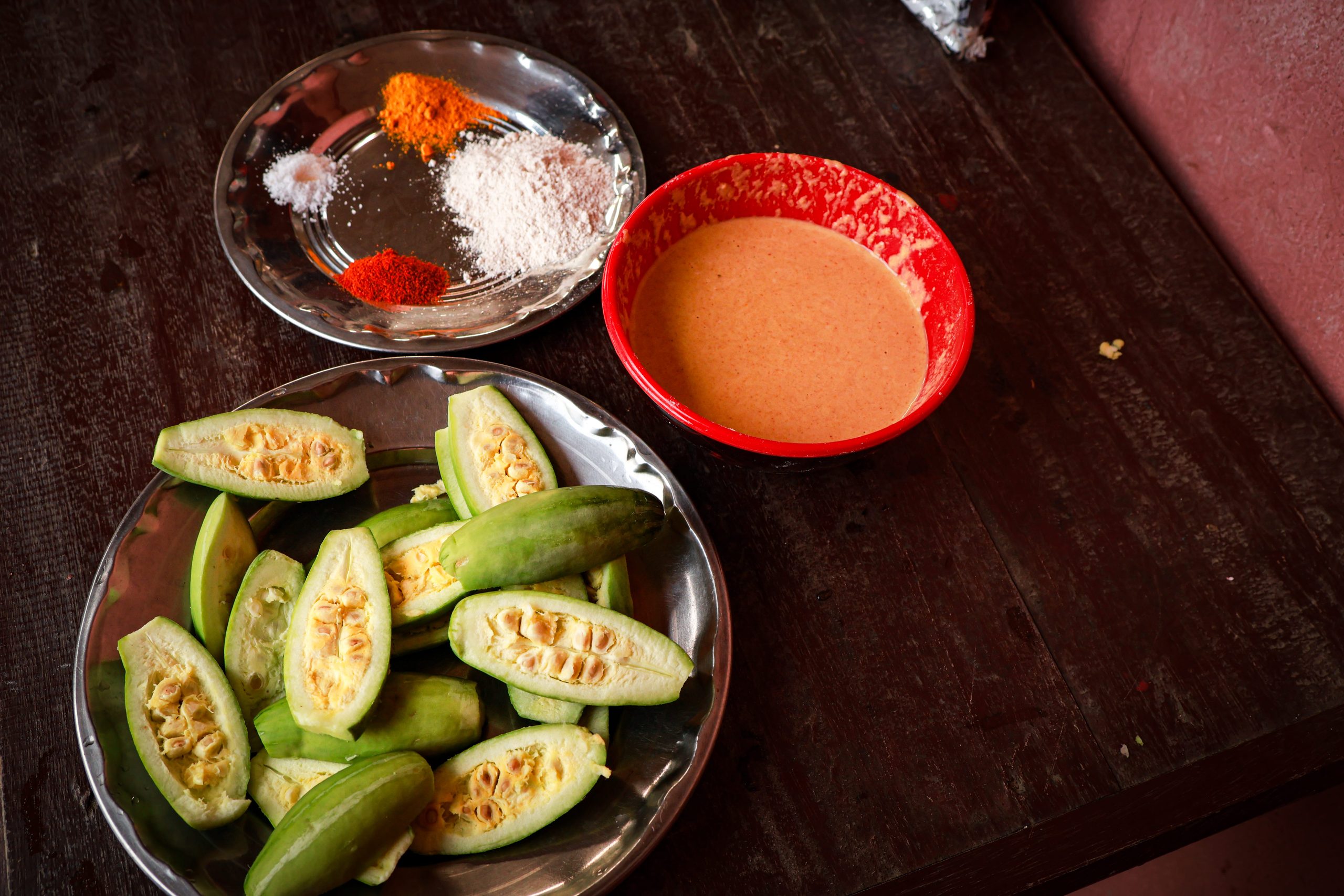
Preparation
- Prepare the pointed gourd. Wash the parwal thoroughly and trim both ends. Cut each vegetable lengthwise into two equal halves.
- Prepare the batter. In a mixing bowl, combine the flour, cumin, turmeric, chili powder and salt. Gradually add water, mixing until you get a smooth, thick batter that coats the vegetables without dripping off too quickly.
- Coat the vegetables. Dip each piece of pointed gourd into the batter, ensuring all sides are evenly covered.
- Fry the fritters. Heat oil in a deep pan over low to medium heat. Carefully add the coated pieces and fry for approximately 5–7 minutes, turning occasionally, until golden and crispy.
- Drain. Remove the fritters with a slotted spoon and place on absorbent paper to remove excess oil.
How to serve
Enjoy hot with chutney, tomato sauce, or a cup of tea. Parwal pakoda also pairs well with dal-bhat or other traditional meals.
Tips for better results
- Choose fresh, tender pointed gourd for the best flavor and texture.
- Keep the batter thick enough to coat the vegetables evenly.
- Avoid overcrowding the pan, which can lower the oil temperature and prevent the fritters from becoming crispy.
Ingredient substitutions
Pointed gourd is not always easy to find outside South Asia. If you cannot find it, try:
- Chayote: A good alternative, with mild flavor and relatively firm flesh.
- Zucchini (courgette): An accessible substitute in most Western supermarkets. Choose small, firm zucchini and pat the cut pieces dry before coating them, as they contain more water.
- Ivy gourd (tindora): Another alternative if you have access to an Asian grocery store.
Chayote is the closest practical alternative in terms of texture, while zucchini is the easiest to source.



Traditional Recipes from India
The following two recipes celebrate another group of vegetables commonly used in Indian cooking: bottle gourd and bitter gourd (that you can substitute with zucchini).
3. Kaddu Ka Bachka (Bottle Gourd Fritters)
Recipe shared by Usha, India.
Bottle gourd, known as lauki or ghiya in Hindi, has a mild flavor and high water content. In this recipe, it is grated and combined with gram flour, fresh herbs, and spices to make small fritters. Fried until golden and crispy, kaddu ka bachka is an easy way to turn a seasonal vegetable into a satisfying snack.
Ingredients
For approximately 250 g of grated bottle gourd
- 250 g bottle gourd (lauki)
- 1 cup gram flour (besan)
- 1–2 green chilies, finely chopped
- 1 small onion, finely chopped (optional)
- ½ teaspoon turmeric powder
- ½ teaspoon red chili powder
- ½ teaspoon ajwain (carom seeds)
- A little fresh coriander, chopped
- Salt, to taste
- 1–2 tablespoons water, if needed
- Cooking oil, for deep-frying
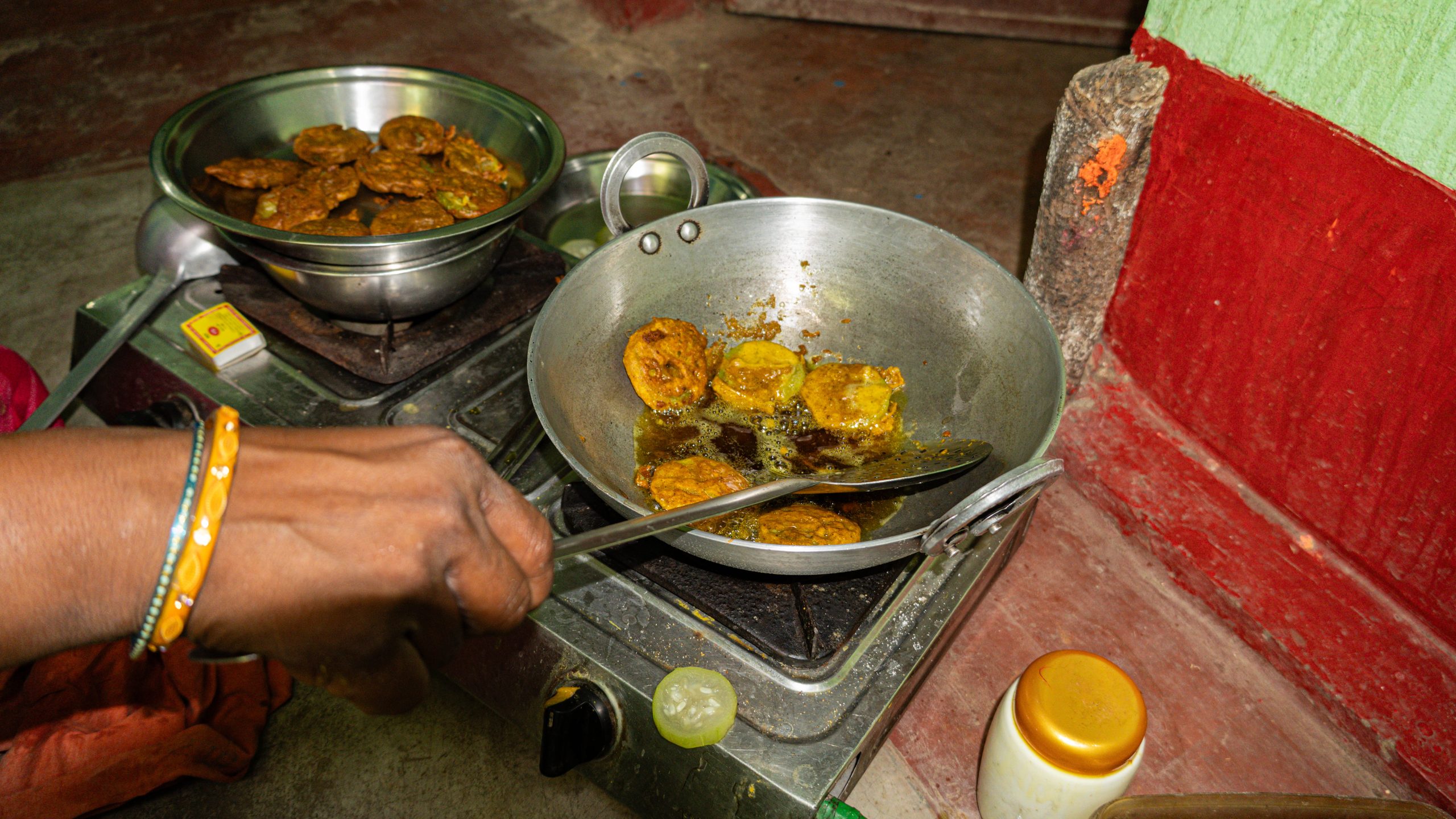
Preparation
- Prepare the bottle gourd. Wash and peel the bottle gourd. Remove the seeds and any tough central portion, then grate approximately 250 g.
- Make the batter. Place the grated bottle gourd in a bowl. Add the gram flour, chopped green chilies, onion (if using), turmeric, red chili powder, ajwain, salt and fresh coriander. Mix well.
- Adjust the consistency. The grated bottle gourd will release water as you mix. If the mixture is too dry, add 1–2 tablespoons of water. If it is too wet, add a little more gram flour. The mixture should be thick enough to hold its shape when spooned into the oil.
- Heat the oil. Heat the oil in a deep frying pan over medium heat. To check whether it is ready, drop a small amount of batter into the oil. It should rise gradually and begin to fry.
- Fry the fritters. Carefully drop spoonfuls of batter into the hot oil, working in small batches. Fry for approximately 3–4 minutes per side, turning occasionally, until golden brown and crispy.
- Drain and serve. Remove with a slotted spoon and place on absorbent paper to remove excess oil.
How to serve
Serve hot with mint chutney, coriander chutney, tomato sauce or yogurt.
For extra crispy fritters: Add 2–3 tablespoons of rice flour to the batter before frying.
Ingredient substitutions
Bottle gourd can be difficult to find in regular Western supermarkets, but several vegetables work well in this recipe:
- Zucchini (courgette): The easiest alternative. Grate and squeeze out some of the excess water before mixing with the gram flour.
- Marrow: Its mild flavor and texture make it a good substitute for bottle gourd.
- Chayote: Can also be grated and used in the batter, although it has a slightly firmer texture.
Zucchini is the most accessible option. Because it releases a lot of moisture, adjust the amount of gram flour to get a thick mixture.


4. Bharui Karela / Bharwa Karela (Stuffed Bitter Gourd)
Recipe shared by Usha, India.
Bitter gourd, known as karela in Hindi, has a distinctive bitter flavor and is widely used in Indian cooking. In this recipe, the vegetable is stuffed with a fragrant mixture of onions and spices, then slowly cooked until tender and lightly browned.
The combination of fennel, coriander, and dried mango powder gives the stuffing its characteristic balance of aromatic, spicy, and tangy flavors.
Ingredients
Serves 4–5
- 500 g bitter gourds (approximately 5–6 medium-sized)
- 2 large onions, finely chopped
- 4–5 tablespoons mustard oil, or another cooking oil
- 2 tablespoons fennel powder
- 2 tablespoons coriander powder
- ½ tablespoon turmeric powder
- 1 tablespoon red chili powder
- 1 tablespoon dried mango powder (amchur)
- Salt, to taste
- Kitchen string, optional

Preparation
- Prepare the bitter gourds. Wash thoroughly and lightly scrape the outer skin. Make a lengthwise slit in each gourd and carefully remove the seeds.
- Reduce the bitterness. Rub salt on the gourds and let them rest for about 30 minutes. Rinse thoroughly and gently squeeze out excess water.
- Prepare the stuffing. Heat 2–3 tablespoons of oil in a pan over medium heat. Add the chopped onions and sauté until golden brown.
- Add the spices. Stir in the fennel powder, coriander powder, turmeric, red chili powder, dried mango powder and salt. Mix well and cook for 2–3 minutes until fragrant. Remove from the heat and allow the mixture to cool slightly.
- Stuff the gourds. Carefully fill each bitter gourd with the onion-and-spice mixture. If necessary, secure the openings with kitchen string to keep the stuffing inside.
- Cook slowly. Heat the remaining oil in a flat pan and arrange the stuffed gourds in a single layer. Cover and cook over low heat for approximately 20–25 minutes, turning occasionally to brown them evenly.
- Finish cooking. Continue until the bitter gourds are tender and lightly golden-brown on all sides.
How to serve
Serve hot with flatbread or steamed rice and lentil curry. The spiced stuffing makes this dish a flavorful accompaniment to a traditional Indian meal.
Ingredient substitutions
Bitter gourd has a distinctive flavor that is difficult to replicate with other vegetables. If you cannot find Indian karela, look for:
- Chinese bitter melon: The closest alternative. It belongs to the same species and has a similar bitter flavor, although its shape and bitterness may vary.
- Okinawan bitter melon (goya): Another good alternative, particularly in Japanese and specialist Asian grocery stores.
If neither is available, you can stuff small zucchini with the same onion and spice mixture. However, the resulting dish will be milder and will not have karela’s characteristic bitterness.

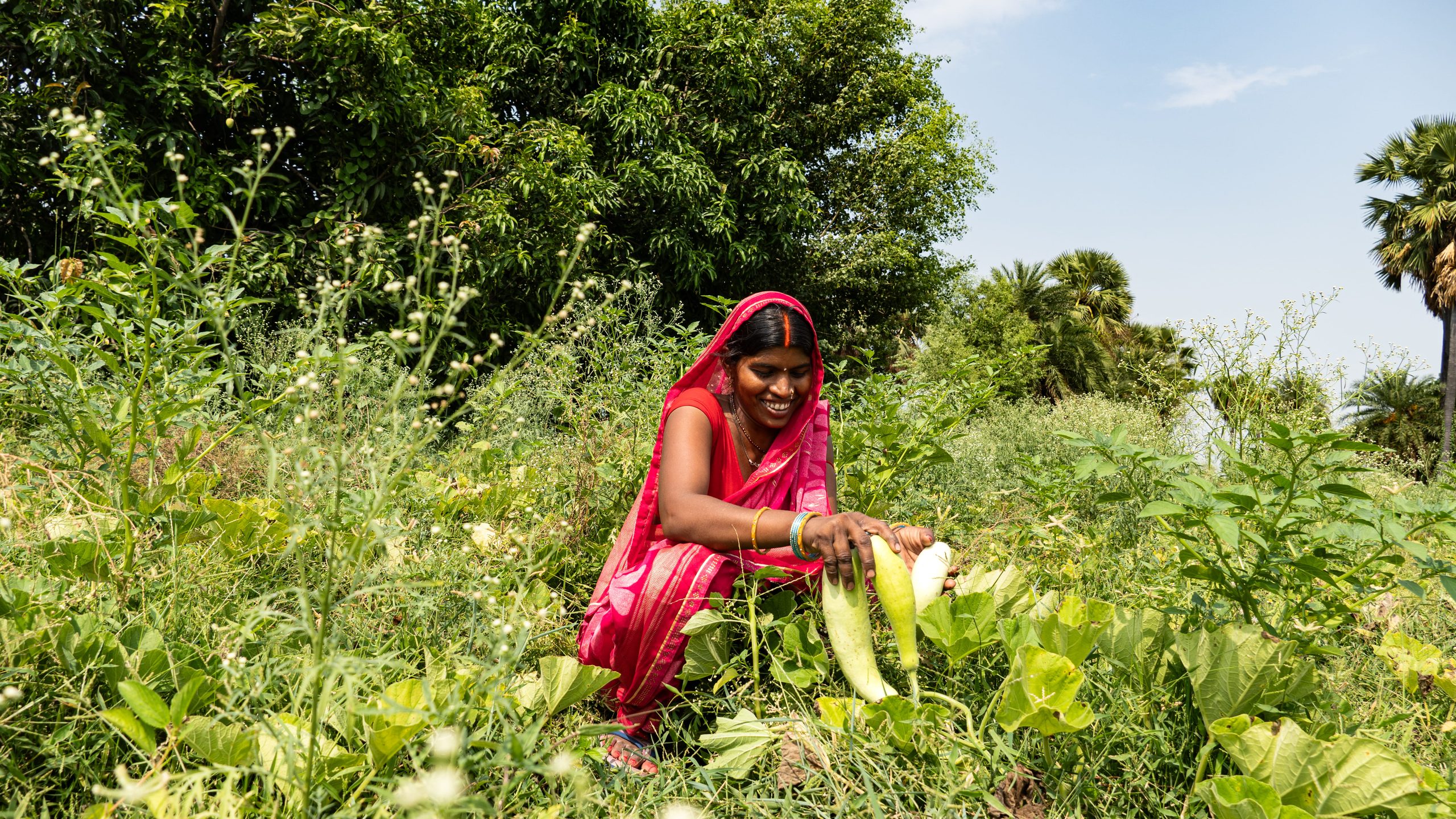
Keeping local food knowledge alive
These four recipes reflect the knowledge women farmers bring to growing, selecting, and preparing local crops, and the role that knowledge plays in keeping food traditions alive.
From using pumpkin leaves to preparing seasonal vegetables with familiar local spices, each dish reminds us of the diversity of ingredients and culinary practices that sustain local food cultures. Sharing and making these recipes is one way to recognize the expertise behind everyday food and celebrate the women who help preserve it, from field to fork.