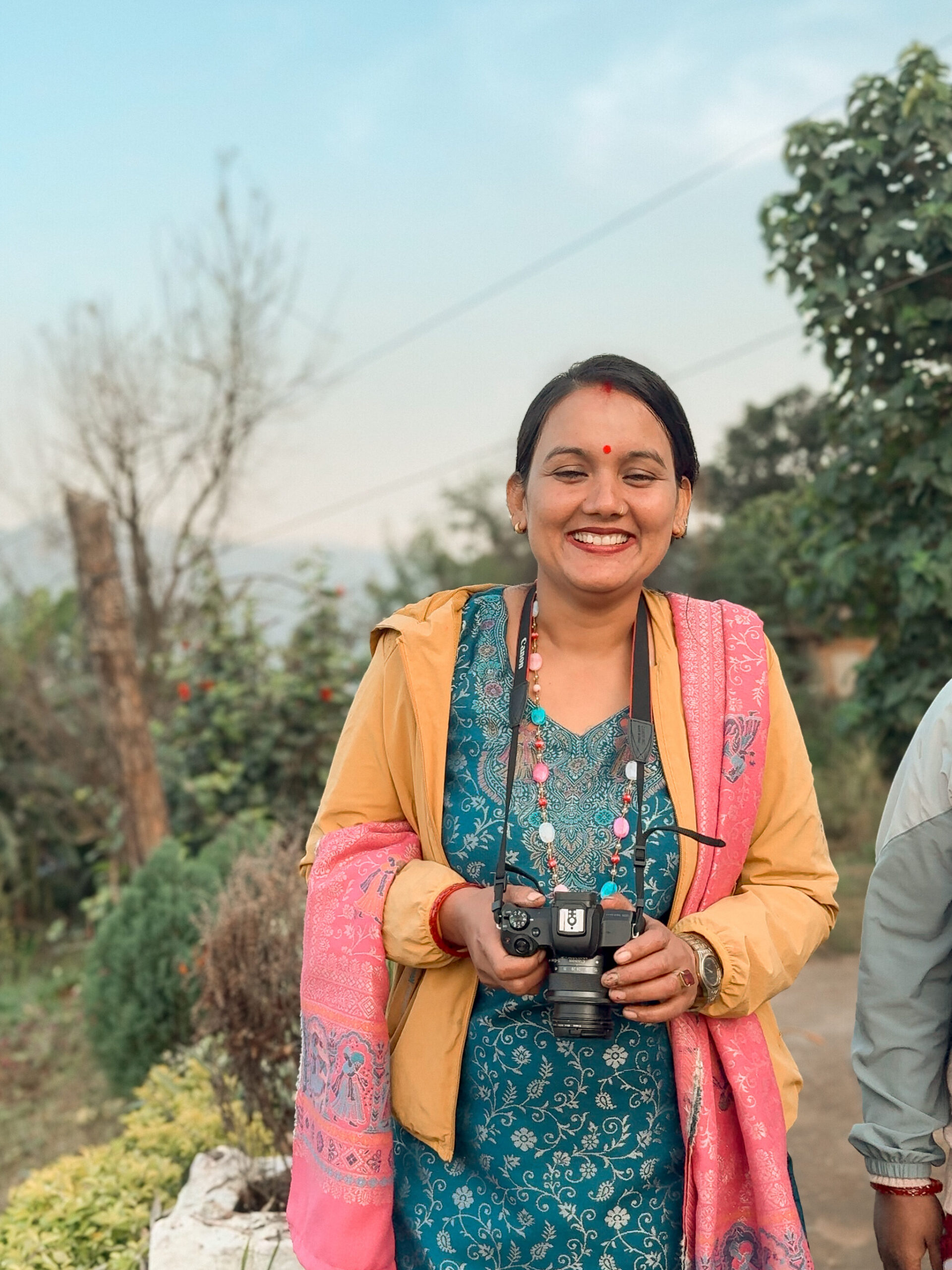
Sumitra recently released her first film, shedding light on the long, often overlooked days of women farmers in Nepal – a daily reality she knows intimately.
At 4 a.m. on a humid monsoon day, Sumitra was already awake.
To catch the 7 a.m. bus to her filmmaking sessions, she first had to finish her household chores and farm work. When she returned in the evening, more work waited for her at home.
For the 33-year-old farmer and mother, learning to make films had to fit around responsibilities that gave little room for anything else. In the end, those same responsibilities became the subject of her first film.
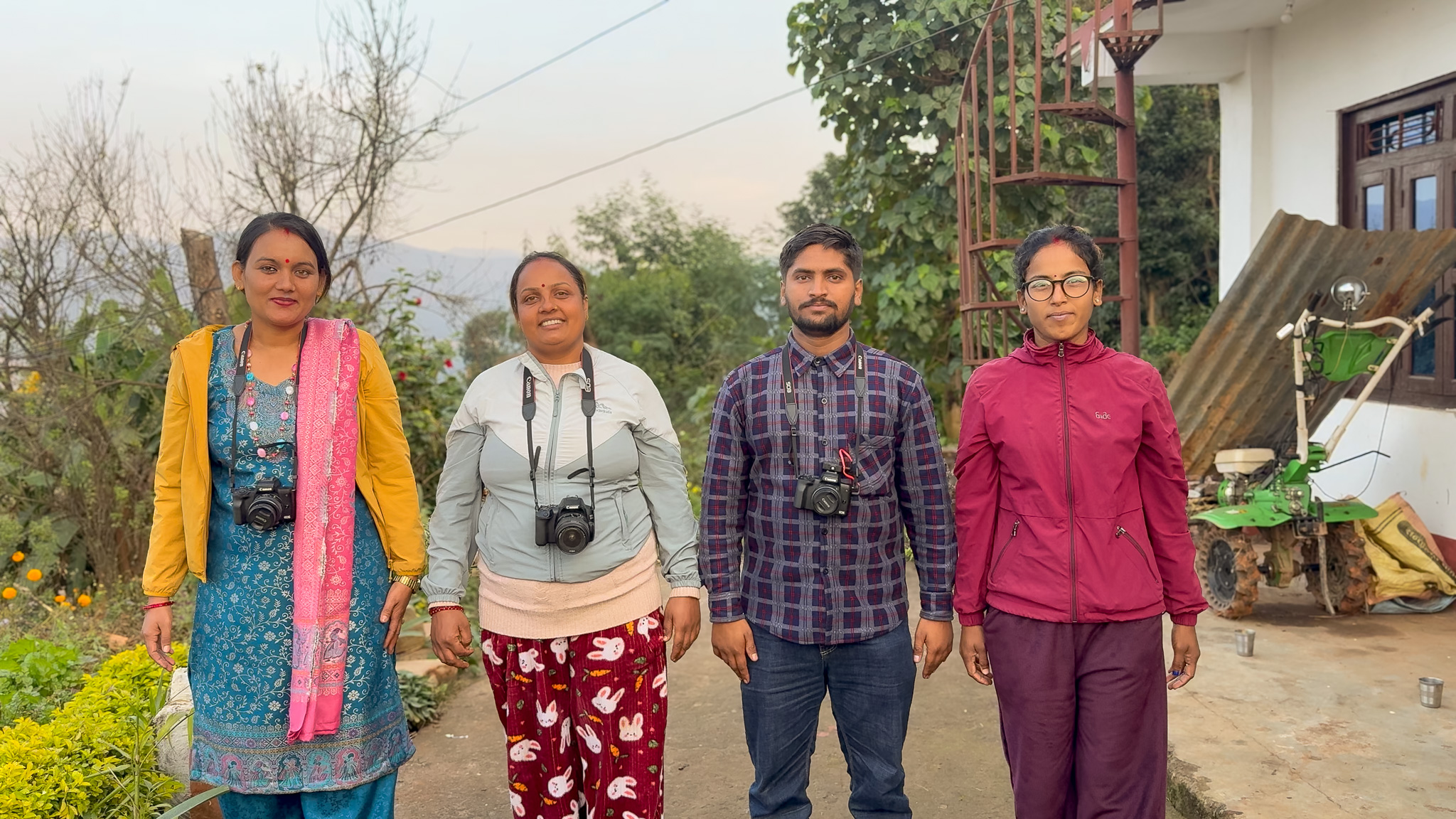
In 2025, she joined the Youth Storytellers Program through the local organization BBP Pariwar, a Groundswell International initiative empowering rural and Indigenous youth to become storytellers of change in their own communities. Rather than having outsiders document the lives of smallholder farmers, the program places rural youth as the best authors of their communities’ stories, and equips them to build the confidence to record and share stories that matter to them. During a seven-day course, she learned how to handle a camera, conduct interviews, compose shots, and edit footage. She didn’t have to look far for her first story: she was already living it.
Her first film, A Day in the Life of a Woman Farmer in Nepal, follows the work that goes largely unseen by women farmers: growing food, caring for children, managing a household, and finding ways to cover the family’s expenses, on top of tending fields and selling at markets. Much of this labor happens without pay and often without recognition. Sumitra wanted people to see how much women carry in her village and beyond.
But her film reveals far more than the hardships women endure. It celebrates their joy, wisdom, and strength as they care for their children, nurture life from the soil, and support their households. With vivid scenes – a woman cooking over the fire, hands sifting through freshly picked legumes, sharing a meal with children back from school – Sumitra brings to life the tireless energy and devotion behind each daily task, defying the notion that domestic work is “dull” or invisible.
The film premiered at the most recent Youth Storytellers Field to Film Festival: South Asia, on February 28, 2026. There, young filmmakers were invited to share their stories in a live panel. Sumitra’s words stood out for their raw honesty about gender inequality. She spoke not just for herself, but for women everywhere who bear the household’s burdens alone. When asked what she hoped people would take from her film, she shared:
“A woman can manage her entire household and care for her children all by herself, without any help from a man. She can even earn enough from her work to cover the children’s school fees. We women have no free time, from waking up in the morning till crashing into bed at night. But men? They do one small task, head to hotels or shops to chill, come home, pick fights over nothing, and end up yelling at or abusing women. To break free from that kind of treatment, we women have to become independent first.”
Sumitra’s success at the festival opened new opportunities. Recognizing her talent and potential, BBP Pariwar engaged her as a freelance videographer, enabling Sumitra to make additional income.
“I felt proud because this money was earned by my own skill,” she says. “It gives me a right to my own life.”
A year after joining the Youth Storytellers Program, Sumitra now supports new trainings with BBP Pariwar as an assistant trainer, passing her knowledge on to the next generation.
For participants, seeing a rural woman confidently handle a camera, make her own films, and earn an income from her work made storytelling feel less distant. Through her mentorship, Sumitra showed new participants that the lives around them – the work, knowledge, practices and questions they encountered every day – were worth documenting and sharing.
“I went from being a student to becoming an assistant trainer. It showed me that there is nothing a woman cannot do if she is determined.”
An advocate for women and the earth
Farming stays at the center of the stories Sumitra wants to tell. Beyond documenting social struggles, Sumitra is using her camera skills to promote agroecology. She wants to document her methods for saving and nourishing the soil so the land remains productive without harmful chemicals. She also wants her videos to emphasize the link between ecological farming and her family’s health, showing how sustainable food strengthens the household. She’s also planning to record her daily agricultural tasks, from potato cultivation to soil maintenance, to build a digital archive of local knowledge for a worldwide audience.
Who holds the camera changes the story. Sumitra didn’t need anyone to explain her village to her, or to point out which work went unseen. She was living it. An outside filmmaker, in for a few days, would have missed most of what she knew by heart. The Youth Storytellers program starts from that premise: the people inside a community’s life are the ones best placed to document it. It gave Sumitra the camera and the skills. The knowledge, and the story, were already hers.
Her daily responsibilities have not disappeared. But Sumitra’s goal is to be a “voice for the silenced,” proving that through agroecology and storytelling, a woman can be her family’s provider, a steward of the land, and the author of her own story.
Invest in rural youth to spread real solutions
Your gift will equip young leaders in smallholder farming communities across the Global South with the tools, training, and confidence to drive the shift toward regenerative, equitable food systems, where their voices and solutions lead the way.
We use cookies to analyze our traffic and enhance your browsing experience. We never share information about your use of our site with third-party partners. View more