
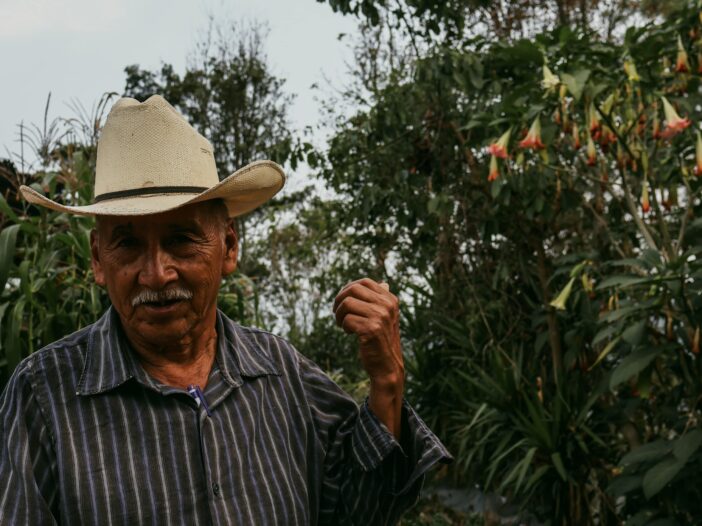
Five in the morning. Don Juan wakes to the sound of roosters in Teotitlán del Valle, Oaxaca—the same routine he's followed since he was six years old. Sixty-eight years ago, he would walk with his father to the foot of El Picacho mountain, through fields thick with alfalfa, corn, beans, and squash. The morning dew would fall on his head. The air smelled like earth. "I remember it used to rain very well," he says. "My father planted twice a year. Back … [Read more...] about Agroecology Works Even Under Climate Pressure: What Our Partners Showed Us in 2025
Bridging the Gap: Appropriate Farming Technology for Scaling Agroecology in West Africa
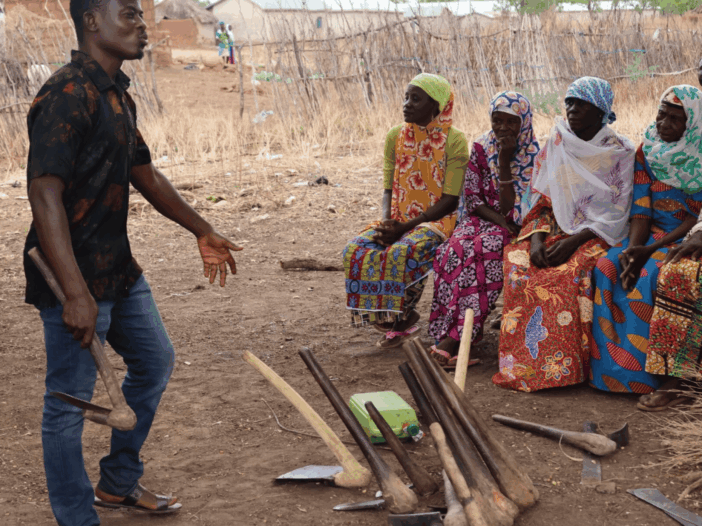
In West Africa, around 80% of the population relies on agriculture, with smallholder farmers producing most of the food consumed locally. Many are turning to agroecology to improve resilience and food security, but the heavy labor demands of agroecological farming limit its adoption. One critical solution lies in what development practitioners call "appropriate technology"—not expensive electronics or AI, but simple, affordable tools designed for local … [Read more...] about Bridging the Gap: Appropriate Farming Technology for Scaling Agroecology in West Africa
Agroecology Pays Off in Burkina Faso: New Study Shows 77% Yield Gains and Strong Financial Returns Despite Extremely Dry Conditions
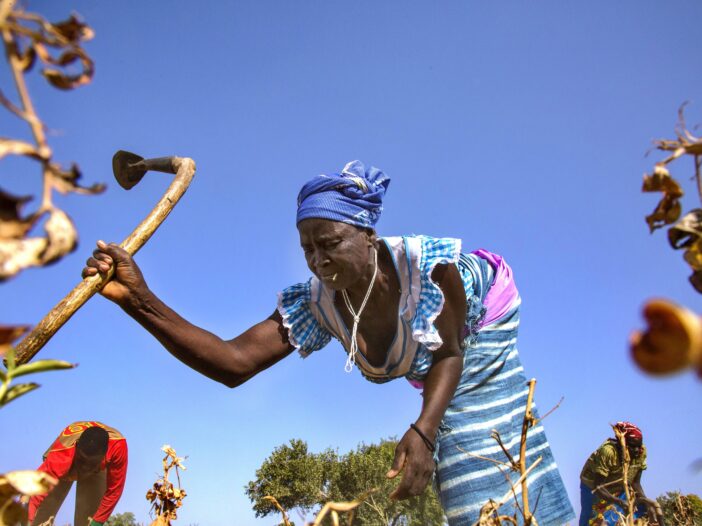
A new study from Groundswell International, Altus Impact, and the Burkinabè NGO Association Nourrir Sans Détruire (ANSD) offers compelling evidence that agroecology works and is ready to scale. The study analyzes data from more than 400 farming households in Burkina Faso’s eastern region, collected between June 2023 and June 2024. The results show a clear progression: as farmers adopt more agroecological practices, their incomes, yields and wellbeing improve. Indeed, farmers using several … [Read more...] about Agroecology Pays Off in Burkina Faso: New Study Shows 77% Yield Gains and Strong Financial Returns Despite Extremely Dry Conditions
Ajil Tz’aqat: A Mayan Way of Life for a World in Crisis
"You are me, and I am you; we are us, and what happens to you happens to me." What would our world look like if this sentence guided our laws, economies, and daily lives? This relational principle is the foundation of Ajil Tz'aqat: a way of life anchored in care, balance, harmony, and reciprocity, shaped by the Mayan cosmovision. It guides the daily life and values of the Maya people in Guatemala, but also the work of local organizations like AGRIDIVI (Asociación de … [Read more...] about Ajil Tz’aqat: A Mayan Way of Life for a World in Crisis
Restoring Ancient Ahar-Pyne Water Systems: A Rebirth of Traditional Farming Practices in India
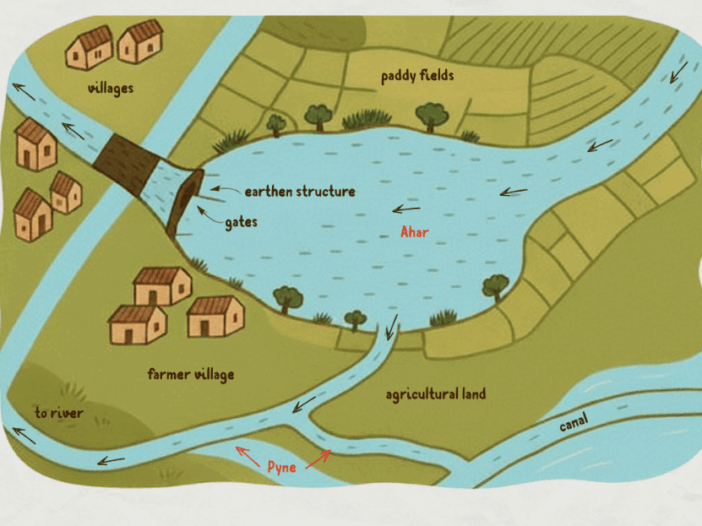
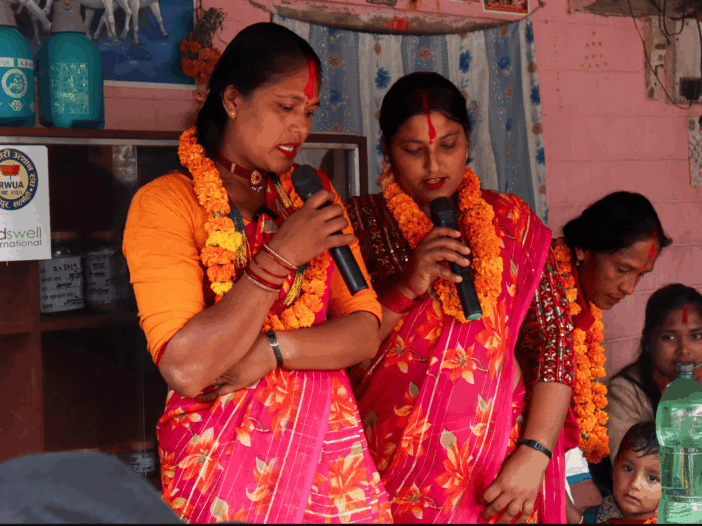
In the flat farmlands of Surungabigha in Southern Bihar, a dry body of water had been quietly fading into memory. The ahar-pyne — a traditional irrigation system developed by smallholder farmers — had long been abandoned. The land around it was barren, weeds growing in clumps where water once flowed. For local farmers, it was a visible reminder of colonial times, when British-imposed “modern” irrigation methods and land policies pushed aside community-built systems and the knowledge … [Read more...] about Restoring Ancient Ahar-Pyne Water Systems: A Rebirth of Traditional Farming Practices in India
What Grows on Concrete? Lessons from the Urkuwayku Regenerative Farm in Ecuador
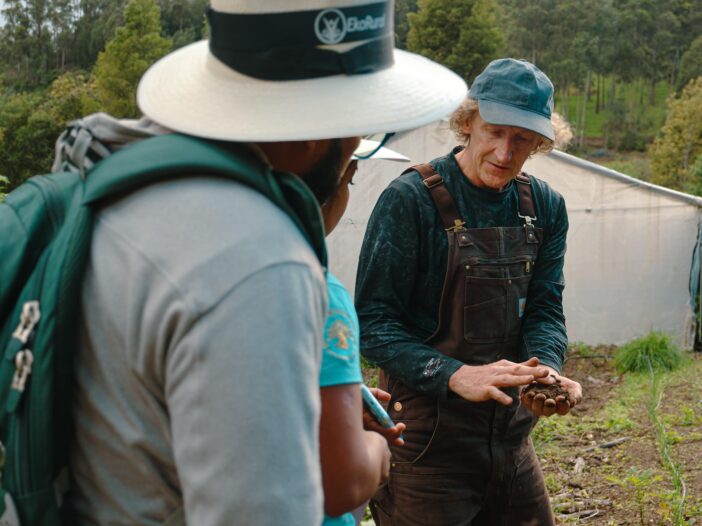
Perched atop a breezy hillside in the Ecuadorian Andes, a 5-hectare farm shows what the future of food can look like. At first glance, Urkuwayku ('Windy Mountain' in Kichwa) looks wild—in the best way. Trees stretch skyward. Flowers bloom in chaotic harmony. Fruits, herbs, grains, and vegetables spring from the ground at every turn. Birds chirp. Insects buzz. Life hums in every corner. This is no accident. Urkuwayku is a living, breathing system—auto-regenerating, as its founder Stephen … [Read more...] about What Grows on Concrete? Lessons from the Urkuwayku Regenerative Farm in Ecuador