

Sumitra recently released her first film, shedding light on the long, often overlooked days of women farmers in Nepal - a daily reality she knows intimately. At 4 a.m. on a humid monsoon day, Sumitra was already awake. To catch the 7 a.m. bus to her filmmaking sessions, she first had to finish her household chores and farm work. When she returned in the evening, more work waited for her at home. For the 33-year-old farmer and mother, learning to make films had to fit around … [Read more...] about What a Woman Farmer Sees Behind the Camera: Sumitra’s First Steps with Community Storytelling
South Asia
As Fertilizer Prices Rise, Agroecology Offers a More Resilient Path for Farmers
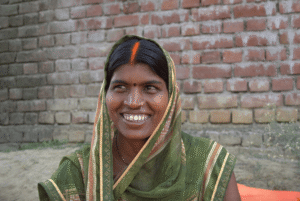
Authors: Sarah Sahlaney and Chandi Guntupalli At Groundswell International, we often talk about how our network builds farmer self-reliance. In an increasingly interconnected world, why does this matter for farmers, their families, and communities? Recent news, and Usha's story, show why self-reliance is such a valuable goal. Throughout April and May, ships carrying hundreds of tons of chemical fertilizers sat in the Gulf of Hormuz, unable to reach their final … [Read more...] about As Fertilizer Prices Rise, Agroecology Offers a More Resilient Path for Farmers
What Happens When a Farmer Stops Buying Seeds, Fertilizers and Pesticides?

Radhika Mahato is a smallholder farmer in Sarlahi, Nepal. For years, she farmed the way most people around her did: one crop at a time, with chemical pesticides from the local shop, and she would buy most vegetables at the market. Most farming decisions were made by male family members, and she used to travel a long way to her field to farm every day. That started to change when she joined hands-on training sessions run by our local partner RWUA (Rural Women's Upliftment Association). The … [Read more...] about What Happens When a Farmer Stops Buying Seeds, Fertilizers and Pesticides?
In Nepal’s Terai Region, Women Farmers are Taking Back Control of their Seeds

In Sarlahi, a district in Nepal’s Terai region, women farmers are rebuilding control over their food supply by taking back ownership of their seeds. Their work is helping to protect generations of agricultural knowledge at risk of being lost forever. Until the 1990s, Nepal was a seed-exporting country. Today, it imports 90% of its vegetable seeds, and of the 4,300 rice varieties its farmers cultivated over decades, only around 150 remain. The shift began in the 1980s, when hybrid seeds … [Read more...] about In Nepal’s Terai Region, Women Farmers are Taking Back Control of their Seeds
How This School Kitchen Garden Is Transforming Meals and Homes in Bihar, India
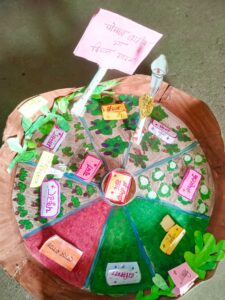
At Utkramit Madhya Vidyalaya, an upper middle school in Bihar with just over 250 students, learning now stretches beyond the classroom walls. In a small garden beside the school, children crouch between rows of local vegetables, their hands dusty with soil as they water, weed, and harvest. The patch of land, once unused and barren, has transformed into a living classroom where tending the earth is becoming as much a part of children's education as reading and math. Learning by … [Read more...] about How This School Kitchen Garden Is Transforming Meals and Homes in Bihar, India
Restoring Ancient Ahar-Pyne Water Systems: A Rebirth of Traditional Farming Practices in India
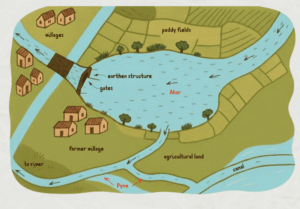
In the flat farmlands of Surungabigha in Southern Bihar, a dry body of water had been fading into memory. The ahar-pyne — a traditional irrigation system developed by smallholder farmers — had long been abandoned. The land around it was barren, weeds growing in clumps where water once flowed. For local farmers, it was a visible reminder of colonial times, when British-imposed “modern” irrigation methods and land policies pushed aside community-built systems and the knowledge that once kept these … [Read more...] about Restoring Ancient Ahar-Pyne Water Systems: A Rebirth of Traditional Farming Practices in India