
Agroecology vs Regenerative Agriculture, Permaculture & Organic Farming: A Comparative Guide
If you’ve read about sustainable food systems, you’ve likely seen the terms agroecology, regenerative agriculture, organic farming, and permaculture. These approaches often overlap, using practices like composting, intercropping, cover cropping, and limiting synthetic chemicals. They all emerged as alternatives to industrial agriculture, striving to grow food in ways that respect both people and nature. However, each one has its own focus, values, and limitations. Understanding those differences matters, especially as some of these terms are increasingly adopted by actors whose interests may not align with the movements that created them.
Four systems, in a nutshell
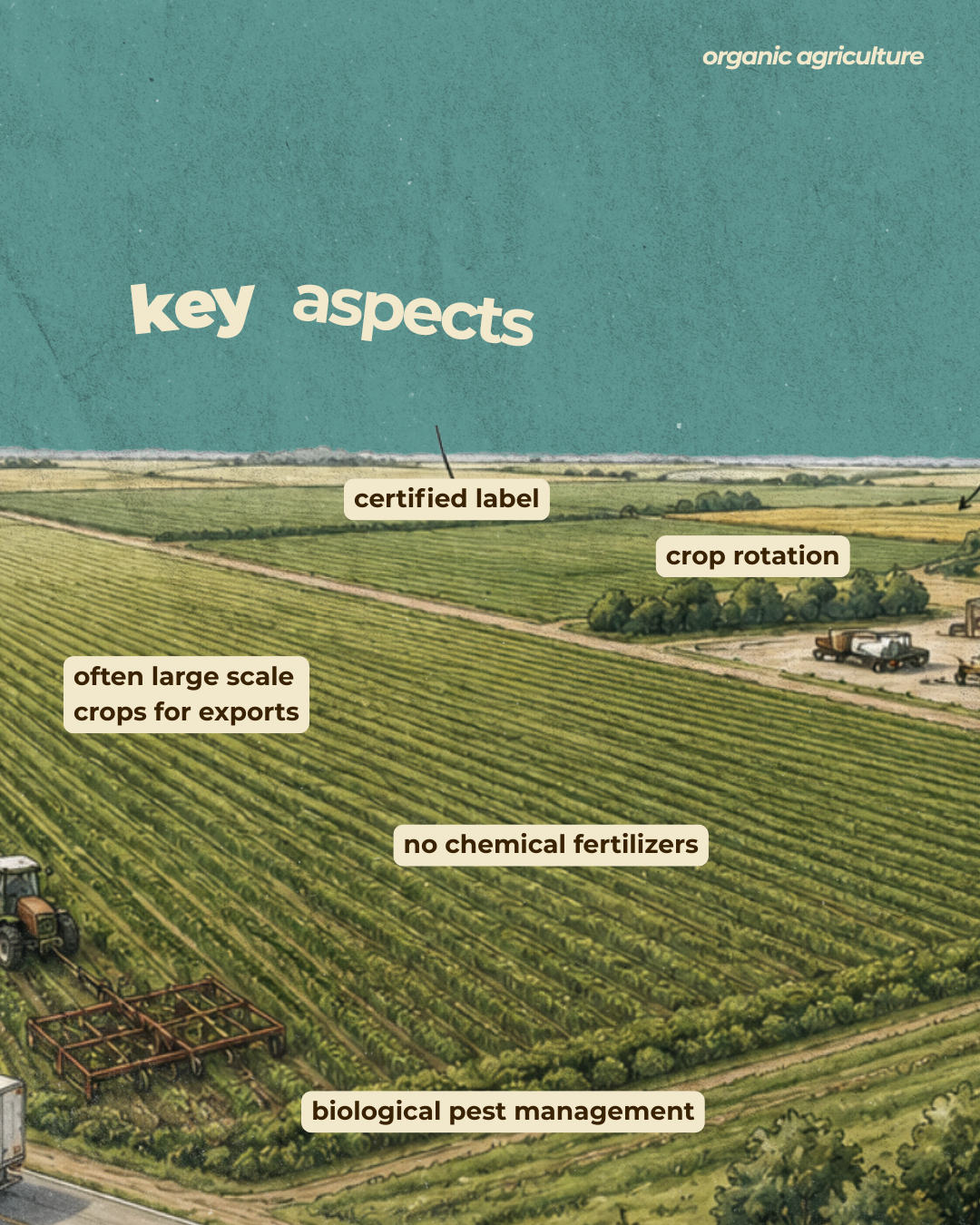
Organic agriculture is the most widely recognized of the four, and the only one with a legal definition. To label food “organic,” producers must meet government certification standards that regulate inputs: no synthetic pesticides, no synthetic fertilizers, no GMOs. Its strength is consumer transparency. But growing demand has attracted large-scale industrial producers, and the certification can be met even while engaging in practices that look very different from what the organic movement originally envisioned.
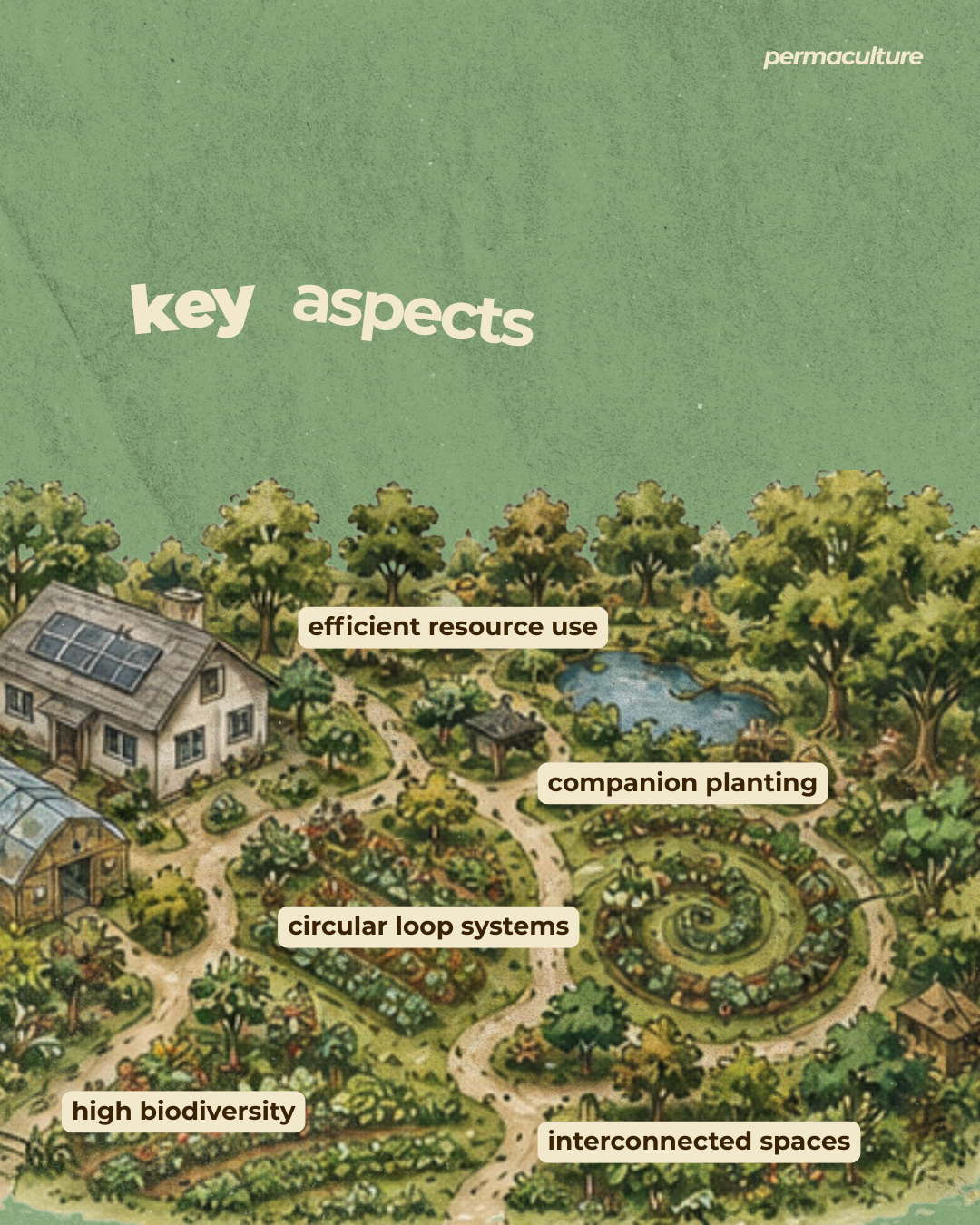
Permaculture is a design philosophy (originally “permanent agriculture”) focused on designing interconnected spaces that mimic natural ecosystems. It’s most commonly practiced in community gardens or small farms and draws from ecological principles to design self-sustaining, circular systems. It tends to operate at the individual or household level rather than at the scale of policy or large collective action.
Regenerative agriculture focuses on restoring soil health: rebuilding organic matter, improving water retention, and increasing biological activity underground. Its strength is measurability: soil carbon, water infiltration, and biodiversity outcomes can be tracked and compared. It has gained significant traction in recent years, both among independent farmers and within corporate food supply chains.
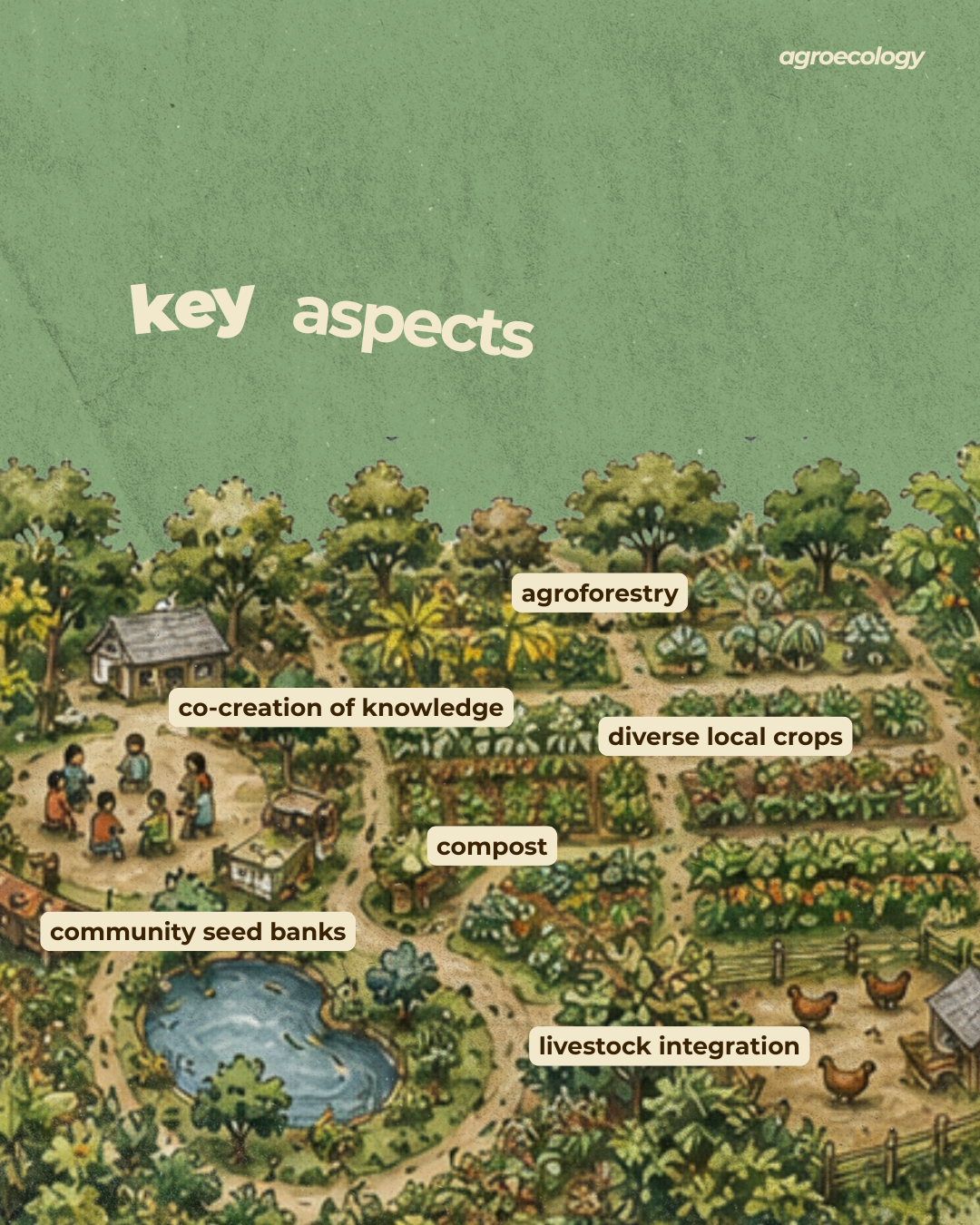
Agroecology applies ecological principles to farming but extends well beyond the field. It is simultaneously a science, a set of practices, and a social movement. It grew out of both interdisciplinary research and farmer-led organizing, particularly in Latin America, West Africa, and South Asia. Its defining feature is scope: it connects farming practices to questions of justice, governance, and farmer autonomy, addressing who controls seeds, resources, knowledge, and markets.

Where agroecology and regenerative agriculture diverge
Agroecology and regenerative agriculture are often confused because they have a lot in common. Both prioritize soil health, biodiversity, and reduced dependence on external inputs. Both are often practiced by the same farmers, sometimes simultaneously.
The main difference is what each approach includes in its scope.
Regenerative agriculture focuses primarily on ecological outcomes at the field level. How is the soil? Is organic matter increasing? Is water infiltrating effectively? These are important questions with measurable answers, and that measurability is part of what makes regenerative agriculture attractive to funders, policymakers, and food companies looking for sustainability metrics.
Agroecology asks those same questions, and more. It doesn’t stop at the field; it considers farming inseparable from the political, economic, cultural, social and environmental systems around it. Who controls the seeds? Who sets the prices? Whose knowledge informs the farming decisions? A farm can achieve excellent soil health outcomes while still operating within structures that concentrate power, displace local knowledge, or increase farmers’ dependence on external markets and inputs. Agroecology, as part of the broader food sovereignty movement, gives communities and farmers control, enabling them to shape systems that fit their local contexts, needs, and realities from the bottom up.
A 2022 paper in Frontiers in Sustainable Food Systems framed the distinction in its title: “Regenerative agriculture — agroecology without politics?” The authors argued that regenerative agriculture has gained momentum because it is easier to understand and communicate, while largely avoiding the social and political issues that are central to agroecology, making it more palpable to corporations, policymakers, and the general public.
The corporate question
Major food corporations like General Mills, Nestlé, Danone, and Cargill have launched regenerative agriculture programs within their supply chains. In 2019, General Mills committed to advancing regenerative agriculture on one million acres of farmland by 2030. Nestlé has invested $1.29 billion in regenerative agriculture and aims to source 50% of its ingredients from regenerative farms by 2030. At COP28, Danone, PepsiCo, Cargill, and Nestlé were among the corporations that committed to scaling regenerative agriculture practices on more than 160 million hectares by 2030. The term’s flexibility makes this possible: there is no legal definition of “regenerative agriculture,” no certification standard, and no threshold a farm must meet to claim the term.
Organic agriculture has experienced a similar tension. Organic certification was originally created to help consumers identify food produced with ecological farming practices. But as demand for organic products has grown, large corporations have increasingly entered the market, prompting concerns that the movement’s original values are being diluted.
Critics argue that some large-scale organic operations comply with certification rules while still relying on practices that resemble industrial agriculture. Farms can earn the organic label while operating vast monocultures, using complex machinery, or covering thousands of acres with non-biodegradable plastic mulch. According to La Via Campesina, this corporate-driven model risks pushing the food system further away from long-term sustainability, even when products carry an organic certification.
As Robert Paarlberg observed in the Harvard Gazette, “Most organic food on the market today comes from highly specialized, industrial-scale farms, not so different from those that produce conventional food.” The concern is not that these farms fail to meet organic standards, but that the growth of the organic industry has, in some cases, prioritized certification over the broader ecological and social goals that originally inspired the movement.
Agroecology is harder to fit into corporate frameworks because it is fundamentally led by farmers and local communities. Its practices are context-specific, knowledge-intensive, and tied to local collective decision-making, which makes it harder to commodify or restrict ownership. But that same quality slows its spread: agroecology has the widest scope of any of these systems, yet it’s difficult to measure, certify, or communicate in a sentence, which may explain why it’s been slower to gain mainstream traction.
Not in competition
These approaches to farming aren’t in opposition, and all have contributed meaningfully to shifting agricultural practice away from the worst excesses of industrial production. They can also be applied simultaneously on the same field. In practice, a farmer is often using several of these approaches on the same plot. A smallholder in West Africa may practice intercropping (an agroecological, regenerative agriculture and permaculture principle), build soil organic matter (a regenerative agriculture priority), and avoid synthetic inputs (an organic standard), without necessarily identifying with any single approach.
The distinction becomes especially important when it comes to policy, funding, and how agricultural systems are framed by institutions. When governments or donors invest in “regenerative agriculture” without addressing land tenure, seed sovereignty, or market access, they’re investing in ecological improvement without structural change. When the term “organic” is used to market products from industrial-scale operations that bear little resemblance to the movement’s origins, does it still deserve the label?
This is where agroecology takes a broader view. It argues that questions about farming practices cannot be separated from questions about power, ownership, and decision-making. In other words, changing how food is grown also requires asking who grows it, who benefits from it, and who has a voice in shaping the food system.

Why we focus on agroecology
At Groundswell International, we work with farming communities across West Africa, South Asia, and Latin America who practice agroecology daily. Many of them draw from regenerative, permaculture, natural farming, and organic approaches as well. Agroecology ties them together, connecting ecological practices to the social, economic, and political conditions that determine whether they can spread, persist, and benefit the people who need them most.
Real change in agriculture will likely require contributions from all of these approaches, suited to different contexts. But for us, agroecology offers the most complete picture of what that change needs to look like.
Explore more: