
Agroecology Works Even Under Climate Pressure: What Our Partners Showed Us in 2025
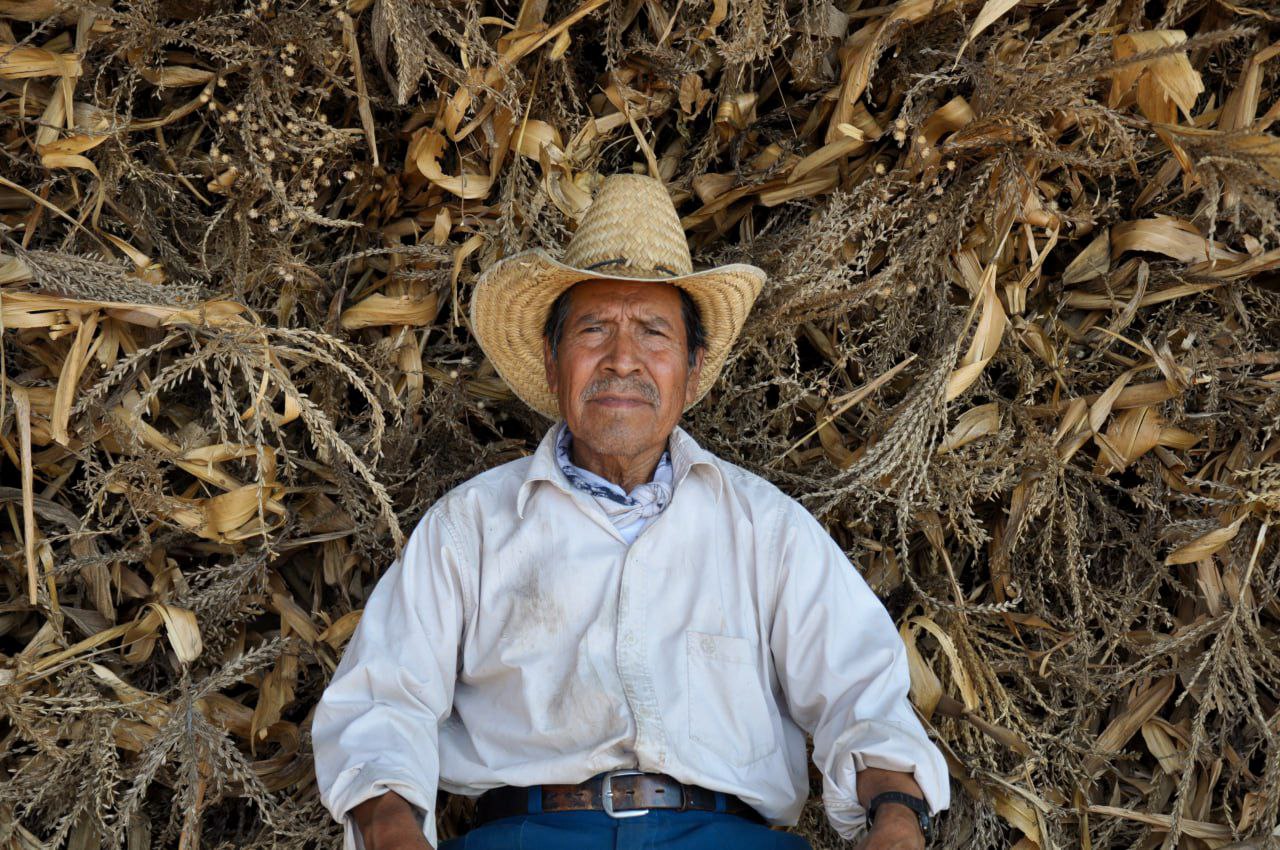
Five in the morning. Don Juan wakes to the sound of roosters in Teotitlán del Valle, Oaxaca—the same routine he’s followed since he was six years old. Sixty-eight years ago, he would walk with his father to the foot of El Picacho mountain, through fields thick with alfalfa, corn, beans, and squash. The morning dew would fall on his head. The air smelled like earth.
“I remember it used to rain very well,” he says. “My father planted twice a year. Back then, the rains began in February, and the water was so abundant that it collected in the river intakes, and we happily irrigated our crops.”
Today, the rains are scarce. “Difficult times are coming,” his wife Emilia says. “Life becomes harder every day.”
Don Juan and Doña Emilia are not alone. Across the Global South, smallholder farmers are living with erratic weather, prolonged droughts, and shrinking harvests. 2025 brought intense climate pressure and rising injustice: heatwaves in Central America, flooding in South Asia, drought across West Africa, but also, violence and insecurity across almost every country we work in, forcing farmers to abandon their land and livelihoods and pushing entire families into precarious conditions.
But something else is also happening. Farmers are reclaiming land, reviving native seeds, strengthening soil, and learning from one another. They’re cultivating fair, regenerative and local food systems that benefit both people and nature.
Agroecology is not a quick-fix solution. It requires time, patience, and long-term support measured in years, not quarters. Our partners work side by side with farmers throughout this transition, knowing that the benefits, such as stronger soils, more stable yields, and greater resilience to climate shocks, take time and courage to build.
Despite the challenges, we’ve seen families become more food-secure, communities more organized, and farming systems better able to withstand droughts and floods. Recent field evidence showed that agroecological plots recovered more quickly from extreme weather than conventional ones. Agroecology doesn’t eliminate hardship, but it helps communities face it with stronger foundations.
What follows is what our partners showed us in 2025: the practices, models, and strategies that are sustaining people and land together, even under pressure.
Latin America & the Caribbean: Food Sovereignty as a Daily Practice
Across Latin America and the Caribbean, climate stress pushed farmers to deepen agroecological practices that promote food sovereignty and local organization.
Seeds, Soil, and Local Knowledge
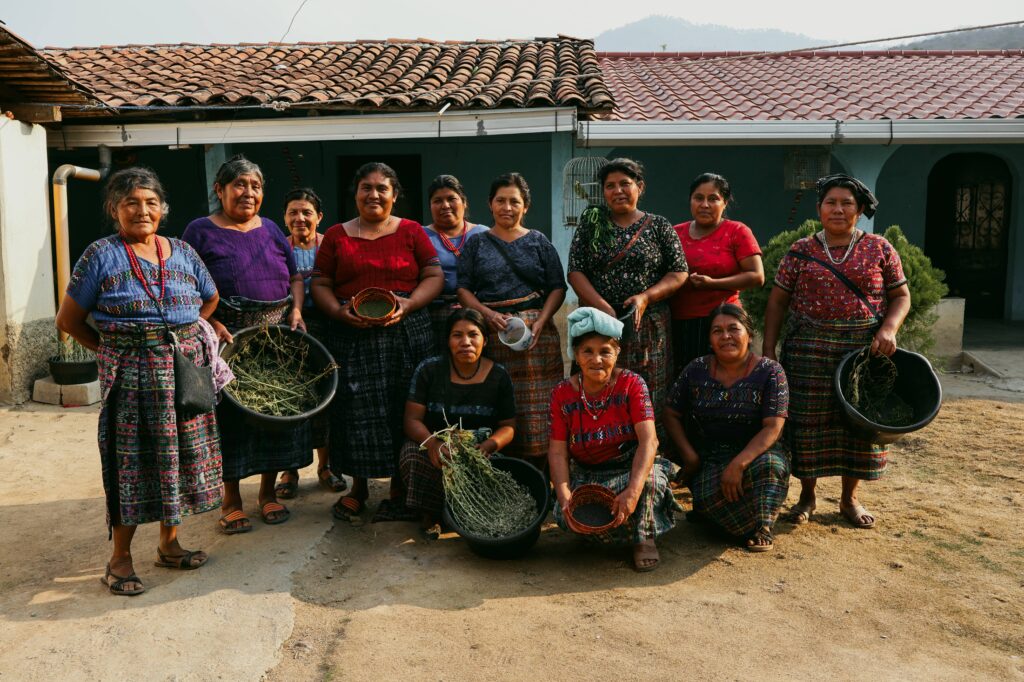
Partners in Guatemala, Honduras, and Mexico supported farmers in strengthening milpa systems, diversifying plots, and reviving seed exchange networks. Native and heirloom seeds were collected, multiplied, and shared across communities, ensuring crops better adapted to local conditions while preserving traditional knowledge. Youth facilitators in Honduras played a central role in this work, leading seed distribution, managing experimental plots, and supporting farmer-to-farmer learning.
Soil health remained a foundation. In Honduras, farmers compared organic and chemical inputs side by side and found organic inputs to be cheaper, easier to source locally, and better for long-term soil health. In Guatemala, a severe heat wave reduced early corn and bean yields, but earlier diversification with fruit trees and coffee proved more resilient. Composting, bocashi production (fermented organic matter), worm humus, and microorganism-based bio-inputs helped farmers increase their crops’ resilience to drought and heat.
Local Markets, Community Grain Reserves, and Collective Structures
Farmers organized regular markets where they sold dozens of crop varieties, in some cases up to 36 different varieties from a single community! Community grain reserves improved food access for families without immediate cash, reinforcing solidarity alongside income.
Partners also helped create local structures to protect land, seeds, and water. In Honduras, Committees for the Defense of Nature brought together farmers, youth, and municipal actors. In Mexico, the Peasant Collective for Agroecology was created by farmers and technicians working with Centéotl to address a shared challenge: recurring crop pests and diseases that existing practices weren’t fully addressing.
Rather than relying on external chemical solutions, the collective decided to strengthen local knowledge and coordination. They began working with specialists in the reproduction and use of beneficial microorganisms (specific fungi and bacteria that act as natural pest and disease controllers). These biological control agents help protect crops while maintaining soil health and reducing environmental harm.
Beyond pest management, the collective serves as a space for peer learning and exchange. Farmers share experiences, test solutions together, and build skills that support more sustainable farming systems. Just as importantly, the collective aims to move agroecology beyond individual plots, helping turn it into a shared practice and a movement shaped by farmer leadership and local innovation.
Learn more: Expanded Seeds: Local market dynamics in Latin America & the Caribbean
Youth Leading the Way
Youth initiatives tied it all together. Through agroecology training, storytelling, and regional exchanges, young people are documenting their territories and asserting their role in shaping food systems. The first in-person regional Youth Storytellers gathering at Lake Atitlán marked a turning point, strengthening bonds, skills, and shared purpose across borders.

West Africa: Scaling Agroecology through Community-Led Structures
In West Africa, partners worked under intense pressure: prolonged dry spells, degraded soils, and rising insecurity. Agroecology advanced through collective, locally-led structures that spread knowledge quickly and reduced risk for farmers.
Farmer Trainers and Appropriate Technology
Agroecology committees and farmer trainers played a key role in scaling agroecology. In Burkina Faso and Ghana, partners trained “trainers of trainers,” enabling farmer-to-farmer dissemination of practices such as composting, liquid biofertilizers, and rainwater harvesting.
In Ghana, farmers collaborated with local artisans to design and build appropriate farming tools tailored to their needs. They created lighter, more efficient, and affordable tools that reduced labor burdens while keeping control local, rather than importing costly machinery.
Large-scale planting of locally adapted trees supported soil regeneration, fodder, and nutrition. In Burkina Faso, radio programs on rainwater harvesting reached nearly one million listeners across the region.
Women’s Economic Power
Women’s savings and credit groups remained central to this work, and many gained legal recognition during the year. This unlocked access to larger credit facilities and enabled expansion into livestock and processing activities. Partners in Mali and Burkina Faso extended support to refugee families through community gardens, enabling them to recover and rebuild sustainable livelihoods through agroecology.
Local markets grew alongside this organizing. Women’s groups moved beyond raw production into processing shea butter, soap, rice, and fermented foods, responding to local consumer demand. Community-managed grain storage facilities reduced post-harvest losses and stabilized food access, strengthening both income and collective organization.
Bringing Agroecology into Public View
Short films produced with our partner in Burkina Faso highlighted how agroecology supports healing, dignity, and community cohesion. One film followed refugee women rebuilding livelihoods through a community garden. Another showed a farmer regenerating degraded land after seeing peers succeed. Shared widely by African influencers, these films brought agroecology to audiences far beyond the project areas.
We also released an impact evaluation study with Altus Impact and our partner ANSD, assessing the impact of agroecology on farmer livelihoods in Eastern Burkina Faso. The data shows that supporting and investing in farmer-led agroecology improves resilience, yields, income, and wellbeing, even during one of Burkina Faso’s driest years on record. The progression is clear: as farmers adopt more agroecological practices, their incomes, yields, and well-being improve. The most advanced systems even achieved yields 4.4 times higher than conventional ones, underscoring the true potential of the agroecological transition. You can find a summary of the findings here.
At the policy level, partners engaged municipalities, universities, and national movements to secure long-term commitments. From local budget lines for agroecology to national roadmaps toward recognition by 2030, these efforts show how practice and policy can reinforce one another.

South Asia: Building Confidence Through Learning and Exchange
In South Asia, erratic monsoons and flooding made farmers cautious about change. Partners responded by reducing risk through learning-by-doing.
Demonstration, Observation, and Peer Learning
In India, exposure visits allowed farmers to observe multi-layer farming and new crops growing under real conditions. Several farmers decided to plant new crops themselves after seeing results, while simple machine rental systems helped overcome labor shortages without increasing debt.
In Nepal, training in biofertilizers, vermicomposting, agroforestry, seed saving, and intercropping was reinforced through demonstration plots, farm visits, and visual banners in public spaces. After severe flooding damaged crops, partners created spaces for open discussion, sharing both losses and successes to rebuild trust in agroecological approaches.
Seeds, Nutrition, and Livestock
In Nepal, RWUA is strengthening community seed banks. Farmers are now using locally collected seeds, which reduces costs, protects local varieties, and supports more diverse and nutritious diets.
BBP Pariwar is addressing nutrition at both the household and community levels. Families received livestock to improve access to dairy and protein, generate income, and support bio-input production through dung and urine. BBP Pariwar also conducted health education sessions covering nutrition, reproductive health, and preventive care, building confidence among women and youth to make informed decisions for their families.
Reaching the Next Generation
Partners are laying the groundwork for long-term change by working with schools, youth, and local institutions. In India, PRAN is working with a local school to restore three acres of barren land by planting fruit trees, turning unused space into a source of food, shade, and learning.
RWUA organized agroecology orientations in two schools, reaching 61 students with sessions on healthy farming and the impacts of chemical inputs on soil, human health, and the environment. Students then took part in an art competition, using drawing and creativity to express their understanding of agroecology and environmental care. RWUA also supported the creation of school kitchen gardens, contributing to the nutrition of younger students who receive midday meals with food they helped grow.
BBP Pariwar focused on strengthening the formal recognition of farmer groups. Several groups were registered or renewed with municipal authorities, helping them access public support, technical services, and funding opportunities.
A Regional Milestone
A major milestone came with the first South Asia Regional Conference, where partners gathered to reflect on progress, challenges, and shared strategies for agroecology, women’s empowerment, and youth engagement. Youth Storytellers actively documented the event, reinforcing their role as communicators and key participants in shaping the region’s agroecological future.


What This Tells Us
Across regions, the evidence is consistent. Agroecology helps build resilience in the face of an uncertain future: soils recover. Food systems become fairer and more reliable. Women and youth take on leading roles. Knowledge circulates within and across communities, rather than being controlled by external companies.
Does agroecology have limitations? Yes. The transition takes time. Costs can increase during the early years before benefits appear. Local markets must develop alongside production. But agroecology has the conceptual foundation, practical applications, and social legitimacy to support fair food systems transformation and tackle climate change, food insecurity, biodiversity loss, and ecosystem degradation. The alternatives—continuing to depend on chemical fertilizers, monocultures, and systems that degrade soil and water, deepen injustice and harm people’s health—are not holding up under the pressure of climate change.
The question is not whether agroecology works but whether we will support the transition at the scale and pace required. Because the climate will not wait, and farmers cannot make this shift alone.
As 2026 begins with its fair share of challenges, we are grateful for the partners and communities who continue this work. To our partners—ACESH, AGRIDIVI, Centéotl, EkoRural, PDL, Qachuu Aloom, Vecinos Honduras, BBP Pariwar, RWUA, PRAN, Agrecol, ANSD, CEAL, CIKOD, URBANET, and Sahel Eco—thank you for the persistence, courage, and care you bring to this work.
To our supporters: your solidarity makes this possible! As we move into the year ahead, help ensure this work can continue by staying engaged and contributing what you can to sustain community-led agroecology where it matters most.
👉 Stand with our partners in the year ahead
And if a specific initiative resonates with you, we invite you to reach out!
Invest in smallholder farmer communities to spread real solutions
Your gift will directly impact smallholder farmers in the Global South and strengthen their capacity to build fair, regenerative farming and food systems from the ground up.